Catering Invoice Template: Guide and Sample
Need a professional catering invoice template? Learn what to include, how to calculate totals, and simplify your billing process with our expert guide.
Published · Updated · By ToolNimbly
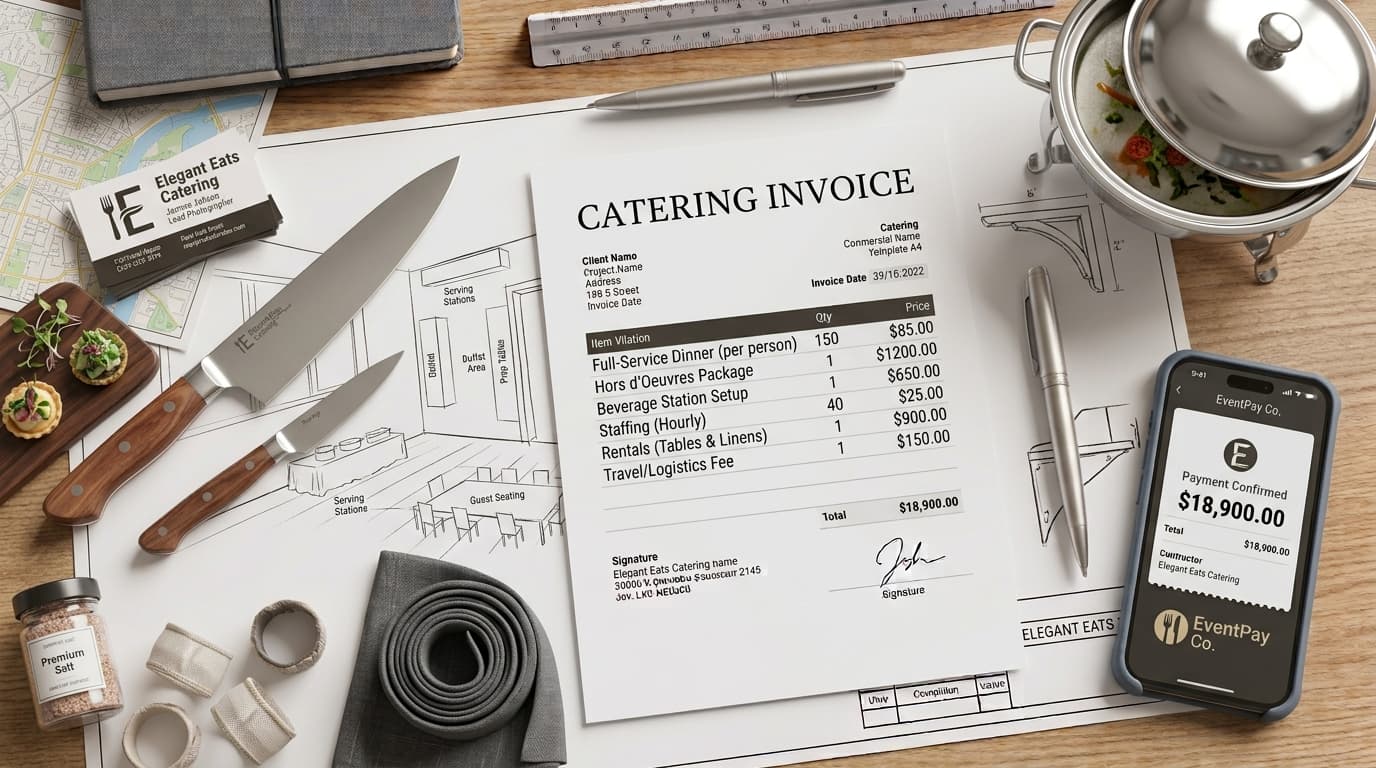
A professional catering invoice serves as a formal request for payment following the completion of event services. It acts as a primary business record, documenting the services provided and the associated costs. For catering business owners, maintaining a clear and organized billing process is a practical step toward managing cash flow and ensuring that clients have a transparent summary of their event expenses.
Unlike a catering contract, which establishes the terms, expectations, and responsibilities for an event, an invoice is a document issued after services are rendered to facilitate the payment process. Keeping these documents distinct helps maintain organized financial records.
Why a Professional Catering Invoice Matters
For many catering businesses, the invoice is the final document provided to a client. A well-structured invoice provides a clear audit trail of the transaction. By breaking down costs into categories such as food, labor, and equipment, you provide the client with a detailed view of the services they received. This level of detail can help reduce ambiguity and provide a clear reference for both the caterer and the client.
When you present a clear, itemized document, you reinforce your professional standards. Clients appreciate transparency, and a structured invoice allows them to see exactly what they are paying for, which can be helpful for their own internal record-keeping.
Essential Components of a Catering Invoice
While there is no single format for an invoice, many businesses find it helpful to include specific information to ensure the document is clear and easy to read. Consider including the following elements:
Business Information: Your business name, address, and contact details.
Client Information: The name of the client, their contact information, and the event name or date.
Invoice Metadata: A unique invoice number and the date the invoice was issued. Using a consistent system for numbering can help you keep your records organized.
Itemized Services: A list of the services provided. Breaking these down into categories such as menu packages, staffing hours, and equipment rentals makes the document easier to review.
Financial Summary: A clear calculation showing the subtotal, any applicable taxes or fees, and the final balance due.
Payment Terms: Information regarding the due date and the methods of payment you accept.
Catering Invoice Sample and Calculation Logic
To ensure your invoice is easy to understand, structure the math so that the client can follow the progression from individual items to the final total. Below is a hypothetical example for a 100-guest event.
Hypothetical Event Breakdown
Menu Package: 100 guests at $50 per person = $5,000
Staffing: 4 servers at $25/hour for 5 hours = $500
Equipment Rentals: Table linens, glassware, and staging = $300
Subtotal: $5,800
Service Charge (20%): $1,160
Sales Tax (8%): $464
Gross Total: $7,424
Less Deposit Paid: -$1,856
Balance Due: $5,568
When you are ready to organize these figures, you can make a catering invoice using our online generator. This tool allows you to create, format, preview, print, or download an invoice as a PDF. It supports the entry of business and client details, line items, fees, and tax, and it performs the necessary calculations to determine the balance due. The tool provides a flexible structure for your billing needs, though users should ensure all required fields for their specific business context are included.
Best Practices for Billing
Consistency is a key component of effective bookkeeping. Using specific, descriptive language for your line items helps clients understand the value of the services provided. Instead of using a generic term like "Catering Services," use descriptive labels such as "Buffet Service: Prime Rib and Seasonal Vegetables" or "Bartender Labor: 5 hours." This clarity is helpful for both the client and your own internal records.
Promptness is another factor in maintaining a smooth financial workflow. Sending your invoice shortly after the event concludes keeps the transaction fresh in the client's mind. This practice is a helpful way to manage your business operations and maintain steady communication with your clients.
Managing Financial Operations
Integrating your invoicing process with your broader financial operations can help reduce manual data entry. When you use a consistent template for your invoices, you ensure that your billing remains uniform across all your events.
Consider the following tips for managing your invoices:
Maintain Consistent Records: Keep copies of all issued invoices. This is a standard practice for tracking business income and managing your financial history.
Offer Clear Payment Instructions: Clearly state how you accept payment. Whether you prefer checks, bank transfers, or other methods, providing this information upfront can help avoid confusion.
Review Your Process: Periodically review your invoicing workflow to see if there are ways to make it more efficient. For example, using a standard template ensures you do not miss important details like the invoice date or the balance due.
Tax and Regulatory Considerations
Tax regulations, including those regarding sales tax and service charges, vary significantly by state and locality. Because these rules are not uniform, it is important to research the specific requirements for your area. Some jurisdictions may have specific rules about how service charges are treated or whether they are subject to sales tax.
If you hire independent contractors or pay other businesses for services, keep in mind that there may be reporting requirements depending on the amount paid during a tax year. Because tax laws and reporting thresholds can change, it is advisable to consult with a qualified tax professional or accountant. They can provide guidance tailored to your specific business structure and location, ensuring that your billing practices align with current regulations.
Maintaining Client Relationships
The invoice is the final touchpoint in your service delivery. A professional, accurate, and easy-to-read invoice contributes to a positive client experience. If a client has questions about an invoice, handle the inquiry with transparency. Having a clear, itemized breakdown ready makes it much easier to address questions and maintain a professional relationship.
Including a brief, polite note thanking the client for their business is a simple way to leave a positive impression. This small gesture can be a meaningful part of your client communication strategy and may encourage future bookings.
Frequently Asked Questions
Is a catering invoice a legal document?
An invoice is a formal request for payment and a business record. It is not a contract. While it serves as documentation of the services provided and the amount owed, it does not define the legal terms of your service. Always use a separate, signed catering contract to outline the legal expectations and responsibilities for an event.
Do I need to include my food handler's license on the invoice?
Requirements for what must be included on an invoice vary by location. Some local health departments or municipal regulations may require specific disclosures on customer-facing documentation. Check with your local environmental health agency to determine if your jurisdiction has any such requirements.
How long should I keep copies of my invoices?
Maintaining accurate records of income is a standard business practice. The duration for which you should retain these records can depend on your specific business needs and tax obligations. Consult with an accountant to determine a record-retention policy that is appropriate for your business.
What should I do if a client does not pay on time?
If a payment is overdue, a professional follow-up is a standard first step. A polite email or phone call is often sufficient to resolve the matter. If the issue persists, refer to the payment terms outlined in your original contract. Having clear, agreed-upon terms regarding payment deadlines can provide a helpful framework for addressing late payments.
Can I use a template for my invoices?
Yes, using a template is a highly effective way to ensure consistency and professionalism. A template helps you organize your billing information, such as the invoice number, date, and itemized costs, every time you bill a client.
How do I handle disputes regarding an invoice?
If a client disputes a charge, the best approach is to provide the itemized breakdown and refer back to the original agreement. Transparency is key. By showing exactly how the total was calculated based on the services provided, you can often resolve misunderstandings quickly and maintain a professional relationship with the client.
Disclaimer: This guide is for informational purposes and does not constitute legal, tax, or accounting advice. Tax laws change frequently and vary by jurisdiction. You should consult with a qualified tax professional or accountant to ensure your billing practices comply with all federal and state regulations.
Put this into practice
Use the Invoice tool for the calculation, then read What an invoice needs to contain for the supporting explanation.