Daycare Invoice Template: Guide and Example
Learn how to create a professional daycare invoice. Get tips on billing periods, late fees, and tuition to streamline your payments and build parent trust.
Published · Updated · By ToolNimbly
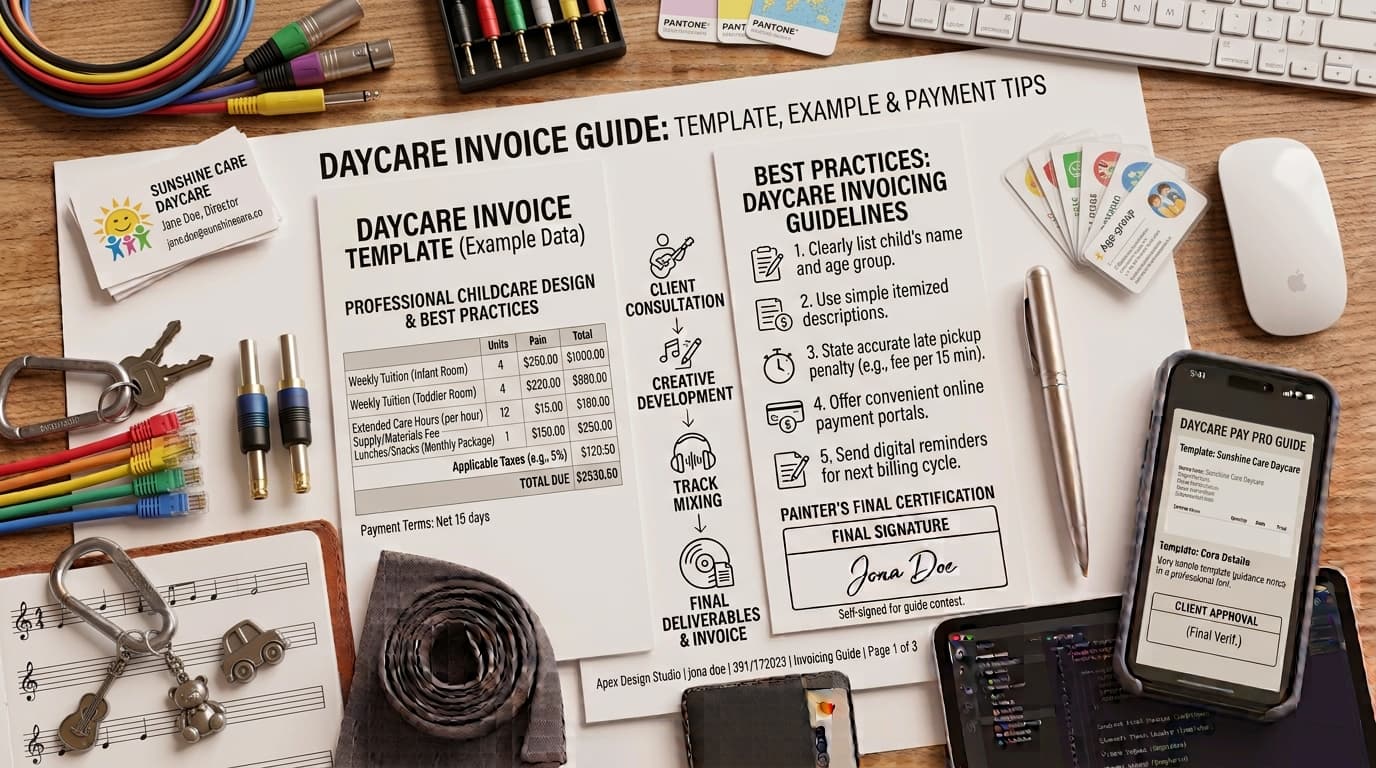
A professional, consistent daycare invoice serves as a request for payment and a record of services provided. When your billing process is organized, it helps clarify expectations for parents and supports your internal bookkeeping. By maintaining a clear and predictable billing structure, you can reduce questions regarding charges and ensure that your financial records remain orderly.
Why Professional Invoicing Matters for Your Daycare
For many families, childcare is a significant monthly expense. Providing a clear, itemized statement helps parents manage their personal budgets and provides them with a record of the services they have purchased. When you present a clean, professional document, you demonstrate that your daycare operates with structure and attention to detail.
Beyond the client relationship, accurate documentation is helpful for your own business management. Parents may request specific details on their invoices to support their own financial planning or to utilize employer-sponsored benefits. Providing a document that clearly lists your business information, the service period, and the specific charges helps ensure that parents have the information they need without requiring follow-up requests.
Common Components of a Daycare Invoice
While there is no single required format for a daycare invoice, a useful document typically includes information that makes the transaction clear to both the provider and the parent. Consider including the following elements:
Provider Information: Your business name, physical address, phone number, and email address.
Client Information: The full name of the parent or guardian and the full name of the child. If you care for multiple children from the same family, listing each child separately can help clarify the charges.
Transaction Details: A unique invoice number for your internal tracking and the date the invoice was issued.
Service Period: Clearly define the dates of service. Using specific ranges, such as October 1, 2026, to October 7, 2026, is more precise than using general descriptions.
Itemized Charges: Break down the total into distinct categories. This might include weekly tuition, registration fees, meal plans, or specific additional services.
Financial Summary: The total amount due, the due date, and your preferred payment methods.
How to Structure Your Billing: Best Practices
Transparency is a practical way to manage expectations. When parents understand exactly what they are paying for, the likelihood of confusion regarding a bill decreases.
Itemizing Charges
Rather than grouping all costs under a single "Daycare Services" line item, consider separating tuition from variable expenses. If a parent owes for an additional service, such as a late pickup, listing it as a separate line item with the date and the calculation used provides clarity.
For example, if your policy involves a fee for pickups after 6:00 PM, an invoice might show:
Weekly Tuition: $300.00
Late Pickup (October 3, 6:15 PM): $30.00
Total Due: $330.00
Handling Discounts
If you offer a sibling discount, show the full tuition for each child and then subtract the discount as a separate line item. This approach shows the parent the value of the service while clearly illustrating the savings they are receiving.
Defining Payment Terms
Your invoice should state your payment terms clearly. Phrases like "Due upon receipt" or "Payment due by Friday at 5:00 PM" provide a clear deadline. If you have policies regarding late payments, including a brief reminder of that policy on the invoice can serve as a helpful reference for parents.
Streamlining Your Process: Manual vs. Digital Billing
Managing invoices manually can become time-consuming as your daycare grows. You might find yourself repeating the same data entry tasks or struggling to keep track of which invoices have been issued and which have been paid.
Transitioning to a digital approach allows you to maintain consistency and reduce the time spent on administrative tasks. If you are looking for a way to standardize your billing, you can create a daycare invoice using digital tools. These tools allow you to input your specific business details, add line items, and generate a professional document that you can print or download as a PDF. This shift helps you maintain a reliable record of your business finances without the need for complex software.
Handling Subsidies and Special Billing Situations
Managing billing for families receiving subsidies or participating in special programs requires attention to detail. Some programs require attendance-based billing to ensure that payments are tied to the actual care provided.
When handling subsidies:
Clearly state the total cost of care.
List the subsidy portion as a credit or a separate line item.
Explicitly show the remaining balance, or the parent co-pay, that the family is responsible for.
Maintaining this level of detail is helpful for your financial records and ensures that the parent understands their specific portion of the bill.
The Importance of Record Keeping
Maintaining an archive of every invoice is a standard practice for long-term business health. In the event of a payment dispute, having a searchable record of past invoices is useful. Digital systems allow you to keep these records organized, which can help you track revenue trends and forecast your cash flow for the coming months.
When you store invoices digitally, ensure they are backed up in a secure environment. This protects your data from hardware failure or physical damage to your office. By keeping your records organized, you maintain a professional boundary while ensuring your daycare remains financially stable.
Communicating Billing Policies to Parents
The success of your invoicing process starts with your parent handbook or contract. Clearly communicate your billing cycle, accepted payment methods, and late fee policies during the enrollment process. When parents sign an agreement that outlines these expectations, they are better prepared for the billing process.
Consider hosting a brief orientation for new families where you walk them through a sample invoice. Explain what each section means and how they can read the itemized charges. This proactive approach builds trust and sets the tone for a professional partnership. If you change your rates or billing policies, provide parents with at least 30 days of written notice. This transparency prevents surprises and allows families to adjust their budgets accordingly.
Leveraging Technology for Growth
As your daycare expands, the complexity of your billing may increase. You may eventually need to manage part-time schedules, drop-in care, and varying meal plans. Trying to track these variables manually can lead to errors. Using a dedicated tool to generate your invoices ensures that your calculations are accurate and that every hour of care is accounted for.
By removing the friction from the payment process, you make it easier for parents to pay on time, which in turn allows you to focus your energy on what matters most: providing high-quality care for the children in your program.
Disclaimer: This information is for educational purposes and does not constitute legal or tax advice. Childcare regulations, including sales tax exemptions and licensing requirements, vary by state. Consult with a qualified tax professional or your local Department of Revenue to ensure your business practices meet all requirements in your jurisdiction.
Put this into practice
Use the Invoice tool for the calculation, then read How extra loan payments save interest for the supporting explanation.