Electrician Invoice Template: What to Include + Sample
Need an electrician invoice template? Learn what to include for professional billing, how to itemize labor and materials, and create an electrician invoice today.
Published · Updated · By ToolNimbly
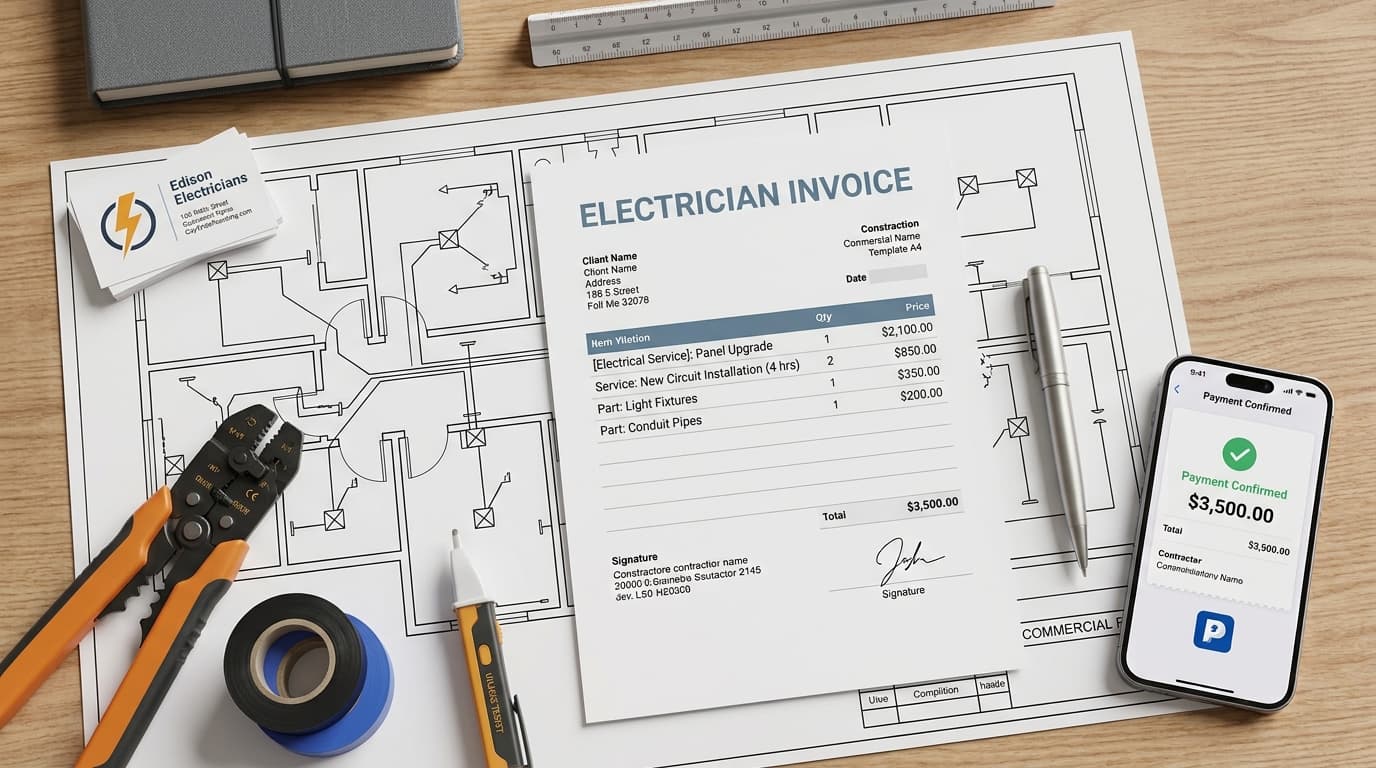
For an electrical contractor, an invoice serves as a primary record of the services provided and a request for payment. Providing a clear, professional document helps communicate the scope of work to your clients, which can assist in maintaining organized business records and facilitating the payment process.
Why a Professional Invoice Matters for Electricians
A well-structured invoice acts as a summary of the work performed and the associated costs. When you provide a clear, itemized bill, you offer the client a transparent view of the services rendered, which is a standard practice for professional service providers.
Consistent invoicing is a practical component of managing your business finances. By using a standardized format, you simplify your own bookkeeping, which can make it easier to track your income and organize your records for your own business management. Furthermore, professional documentation helps you maintain a reputation for clarity, which is useful for securing repeat business and referrals in the electrical trade.
Common Components of an Electrical Invoice
To ensure your documentation is clear and professional, many contractors include specific, identifiable information. While requirements vary by location, you may consider including the following details:
Business Identification: You might include your company name, logo, physical address, phone number, and email. Some contractors choose to display their business registration or license numbers to help clients identify the business.
Client Details: Clearly list the client name and the specific service address. If the billing address differs from the service location, including both can help avoid confusion.
Transaction Data: Assigning a unique invoice number to every job allows you to track your records. Include the date of service, the invoice date, and clearly stated payment terms, such as "Due upon receipt" or "Net 30."
Financial Breakdown: Providing a subtotal, the tax amount, and the final total due is a standard way to present the financial summary. Separating tax from labor and materials is a common practice for clarity.
How to Itemize Your Electrical Service Invoice
A common practice among contractors is to provide specific descriptions of the work performed. Descriptions like "Electrical Work" or "General Repair" are often too vague. Instead, be descriptive. If you replaced an outlet, specifying that it was a "20A GFCI outlet installation" provides the client with a clear understanding of the work completed.
Structuring Service Fees and Labor
It is common practice in the United States to charge a service call or trip fee to cover travel time, vehicle overhead, and the initial diagnostic process. Clearly separating this from your hourly labor rate shows the client exactly what they are paying for. If you offer different rates for residential versus commercial work, ensure these are clearly labeled to avoid confusion.
Materials and Permits
Group materials into logical categories to maintain readability. You do not need to list every individual wire nut, but you should itemize major components like panels, breakers, or light fixtures. For larger projects, including permit numbers and inspection references can be a helpful way to document the project details. Providing these details shows that you have followed the project scope, which is a value-add for the client.
If you are ready to streamline your billing, you can create an electrician invoice using our professional generator to ensure all essential fields are included.
Sample Electrician Invoice
The following table provides a professional structure for an electrical service invoice. This format clearly separates fixed fees, labor, and materials.
Description | Quantity | Rate | Total |
|---|---|---|---|
Service Call Fee (Diagnostic) | 1 | $125.00 | $125.00 |
Labor (Troubleshooting/Repair) | 2 hrs | $90.00/hr | $180.00 |
Materials (20A GFCI Outlet) | 1 | $24.00 | $24.00 |
Subtotal | $329.00 | ||
Tax (State/Local) | $26.32 | ||
Total Amount Due | $355.32 |
Best Practices for Professional Invoicing
To improve your workflow, consider offering multiple payment methods. Modern clients often appreciate the convenience of paying via credit card, ACH transfer, or digital payment platforms. Including clear payment instructions on your digital invoice can help facilitate the payment process.
Additionally, consider sending polite, professional follow-up emails if an invoice remains unpaid after the due date. Keeping your communication professional and consistent is a key part of maintaining healthy client relationships.
Common Invoicing Considerations
The most effective way to prevent misunderstandings is to eliminate ambiguity. Avoid relying on verbal agreements. Documenting the scope of work in writing before you begin, and ensuring the final invoice matches that original scope, is a standard business practice.
If you encounter unexpected issues that require additional labor or materials, communicate this to the client immediately and get their approval before proceeding. Surprise charges on a final invoice are a common cause of client friction.
Finally, be clear about your policies regarding emergency or after-hours work. If you charge a premium rate for emergency calls, this should be explicitly stated in your service agreement and reflected clearly on the invoice. Transparency helps prevent misunderstandings and supports your professional reputation.
Frequently Asked Questions
Should I charge for estimates?Many electricians offer free estimates for potential projects. However, if you are performing troubleshooting or diagnostics, you may choose to charge a service call fee. This covers your time and expertise, regardless of whether the client chooses to proceed with the repair.
Is labor taxable for electrical work?Tax laws vary significantly by state and municipality. Some jurisdictions tax both labor and materials, while others only tax the physical components. You should verify the specific tax requirements for your local area to ensure your invoices are prepared correctly.
What happens if a client disputes an invoice?Disputes often stem from a lack of clarity. If you have a documented scope of work and a detailed, itemized invoice, you are in a better position to discuss the charges. Always maintain a professional, calm tone and refer back to the documented agreement to explain the charges clearly.
How long should I keep copies of my invoices?It is generally recommended to keep business records, including invoices, for several years for your own bookkeeping purposes. Digital storage solutions make this easy and ensure that you can quickly retrieve documentation if a client requests a copy of a past project record.
Note: This information is for educational purposes and does not constitute legal or financial advice. Always consult with a local tax professional or legal advisor regarding specific business regulations in your jurisdiction.
Put this into practice
Use the Invoice tool for the calculation, then read What an invoice needs to contain for the supporting explanation.