Estimate Invoice Template: How to Convert an Estimate into an Invoice
Learn how to convert an estimate into an invoice professionally. Discover best practices for handling scope changes and ensuring your billing is audit-ready.
Published · Updated · By ToolNimbly
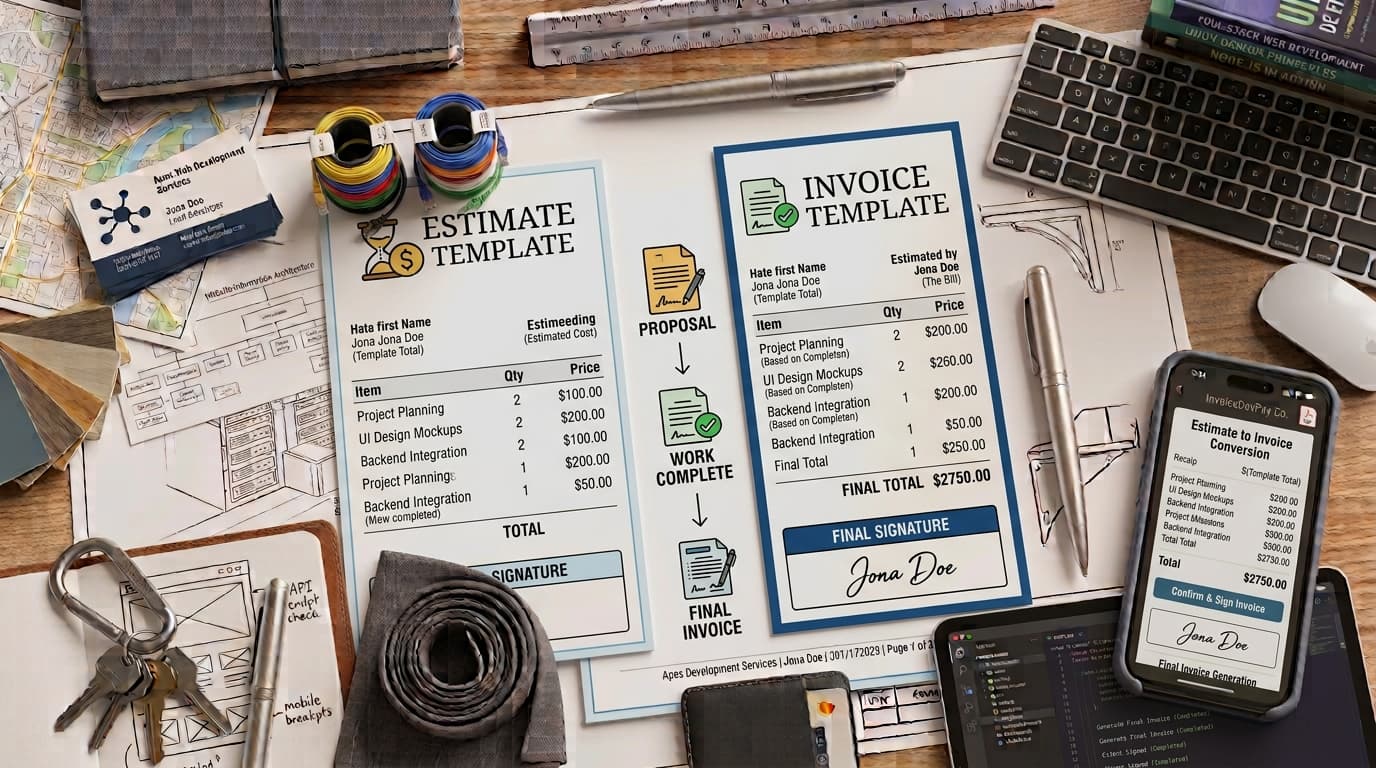
Transitioning from a project proposal to a formal request for payment is a critical moment in the client relationship. When you move from an estimate to an invoice, you shift the nature of your interaction from a projection of anticipated costs to a request for payment. Mastering this workflow ensures you maintain clear communication, keeps your business records organized, and helps you manage your project lifecycle effectively.
Understanding the Difference: Estimate vs. Invoice
Many business owners create friction by treating estimates and invoices as interchangeable documents. They serve different functions in your business workflow.
An estimate is a preliminary document provided before work begins. It outlines projected costs, timelines, and the scope of work. Because it is an offer rather than a request for payment, it does not trigger the same accounting processes as an invoice. Sending an estimate as a bill is a common mistake that causes confusion and delays payment, as clients often view an estimate as a discussion point rather than a request for funds.
An invoice, by contrast, is a formal request for payment issued after goods or services are delivered. It serves as a record of a transaction. Using a proper estimate invoice template helps maintain the distinction between these two stages of your workflow. By keeping these documents separate, you clarify expectations and provide your client with a professional, logical progression of the project.
The Workflow: How to Convert an Estimate into an Invoice
The transition phase requires precision to ensure the final bill reflects the actual work performed. Avoid the temptation to simply resend your estimate as an invoice. Instead, follow a structured process to ensure accuracy.
Reconciliation: Compare the original estimate against the actual time, materials, and resources consumed. If the project remained within the initial scope, the transition is straightforward.
Adjustment: Integrate any pre-approved changes that occurred during the project. If the scope expanded, these additions must be clearly reflected in the final total.
Drafting: Use a consistent format to prevent transposition errors. Re-typing data manually increases the risk of mistakes, which often lead to payment disputes.
Finalization: Once you have reconciled the figures, you can create the final invoice to generate a clean, professional document.
Using a dedicated tool allows you to input your business and client details, define line items, and calculate totals using exact decimal arithmetic. This ensures your final document is clear and easy for the client to review. The tool supports business and client details, an invoice number, issue and due dates, currency, line items, payment instructions, terms, notes, discounts, one document-level tax, shipping or fees, paid amount, and balance due. You can add, remove, and reorder line items, and the tool provides at least two visual templates. Because it processes data locally, no invoice data is sent to a server, and you can print or download your document as a PDF.
Handling Scope Creep and Approved Changes
Scope creep occurs when the requirements of a project expand beyond the original agreement. If you absorb this extra work without documentation, you risk profit erosion, where the time spent on unbilled tasks diminishes your overall project margin.
Never perform additional work without first securing an agreement from the client. When a client requests features or services outside the original scope, document these as a supplemental estimate or a formal change order.
For example, if you are a web designer and the client requests an additional landing page not included in the original bid, send a brief email or a secondary estimate outlining the cost for that specific addition. Once the client approves the change in writing, you can incorporate that line item into the final invoice. This transparent approach protects your revenue and reinforces your reputation as a professional who manages projects with clear communication.
Best Practices for Professional Invoicing
While there is no single mandated format for every business, your records should clearly substantiate income and expenses. During an internal review or tax preparation, you should be able to identify the business purpose of every transaction.
To ensure your records are professional and clear, focus on the following:
Itemization: Provide clear descriptions for every line item. Vague entries like "Consulting Services" are less helpful than specific descriptions like "Project Management: 5 hours of research and strategy development for Phase 1."
Documentation: Keep copies of all estimates, signed change orders, and final invoices. Maintaining a clean, itemized trail of your financial documents protects your business against future uncertainty and simplifies your year-end reporting.
Consistency: Use a standardized layout for your estimates and invoices. This helps clients recognize your branding and understand the information presented, reducing the time they spend questioning the bill.
By maintaining a consistent, professional approach to your documentation, you simplify the billing process and foster stronger, more transparent relationships with your clients.
Progressive Billing for Long-Term Projects
For projects that span several weeks or months, waiting until the very end to issue an invoice can create cash flow challenges. Progressive billing, or milestone-based invoicing, allows you to request payment as specific phases of a project are completed.
If your original estimate is itemized by phase or milestone, you can easily convert those specific sections into individual invoices. For example, if you are a contractor, you might invoice for the "Foundation" phase once it is complete, rather than waiting for the entire building project to finish. This approach keeps your revenue steady and provides the client with smaller, more manageable payment intervals.
When using this method, ensure that each invoice clearly references the original estimate and the specific milestone being billed. This transparency helps the client track progress and understand exactly what they are paying for at each stage.
Communicating with Clients During the Transition
The way you present the final invoice is just as important as the accuracy of the numbers. When you send the invoice, include a brief, professional note that references the project completion.
Avoid sending an invoice with no context. A simple email template can bridge the gap between the project work and the payment request:
"Dear [Client Name],
It has been a pleasure working on [Project Name]. I have attached the final invoice for the completed work. This invoice reflects the original estimate, along with the approved change order for [Specific Addition]. Please let me know if you have any questions regarding the line items. Thank you for your business."
This communication style reinforces your professionalism and provides the client with a clear path to payment. If you have specific payment instructions, such as a preferred method of transfer or a due date, include these clearly in the "Notes" or "Terms" section of your invoice.
Maintaining Organized Records
Effective record-keeping is the backbone of a sustainable business. Beyond just sending the invoice, you should maintain a system for tracking the status of every document you issue.
Create a folder structure: Organize your files by client name and then by project. Within each project folder, keep the original estimate, any signed change orders, and the final invoice.
Use a consistent naming convention: Use a format like "YYYY-MM-DD_ClientName_InvoiceNumber" to make searching for specific documents easier during tax season.
Review your outstanding invoices: Periodically check your records to see which invoices have been paid and which are still outstanding. This helps you identify when to follow up with a client regarding a late payment.
By treating your documentation as a vital part of your business operations, you reduce the likelihood of errors and ensure that you are always prepared for internal reviews or financial planning.
Frequently Asked Questions
Is an estimate a contract?Generally, an estimate is an offer or a project projection. It does not automatically function as a contract unless it is incorporated into a formal agreement or terms of service that the client has explicitly accepted.
What should I do if the final cost exceeds the estimate?If the cost increase results from scope changes, you should have a signed change order in place before the work is completed. If the increase is due to unforeseen expenses, communicate these costs to the client as soon as they arise, rather than waiting until the final invoice is issued. Transparency is essential for maintaining client trust.
What information should I include on an invoice?To ensure your invoices are useful and professional, consider including your business and client contact information, a unique invoice number, the date of issue and the due date, a detailed list of services or products provided, the total amount due, and clear payment instructions. Using a consistent template ensures you capture this necessary data every time.
How long should I keep my business records?The IRS recommends keeping records that support an item of income or deduction on your tax return until the period of limitations for that return runs out. You can find more information on record-keeping requirements at irs.gov.
How should I handle sales tax?Tax treatment and display requirements vary by jurisdiction. You should check with the relevant state or local authority or a professional tax adviser to determine your specific obligations regarding tax collection and reporting.
Put this into practice
Use the Invoice tool for the calculation, then read How to convert salary to hourly pay for the supporting explanation.