Graphic Design Invoice: Template, Example and Payment Tips
Learn how to create a professional graphic design invoice. Get tips on itemization, milestone billing, and payment terms to ensure you get paid on time.
Published · Updated · By ToolNimbly
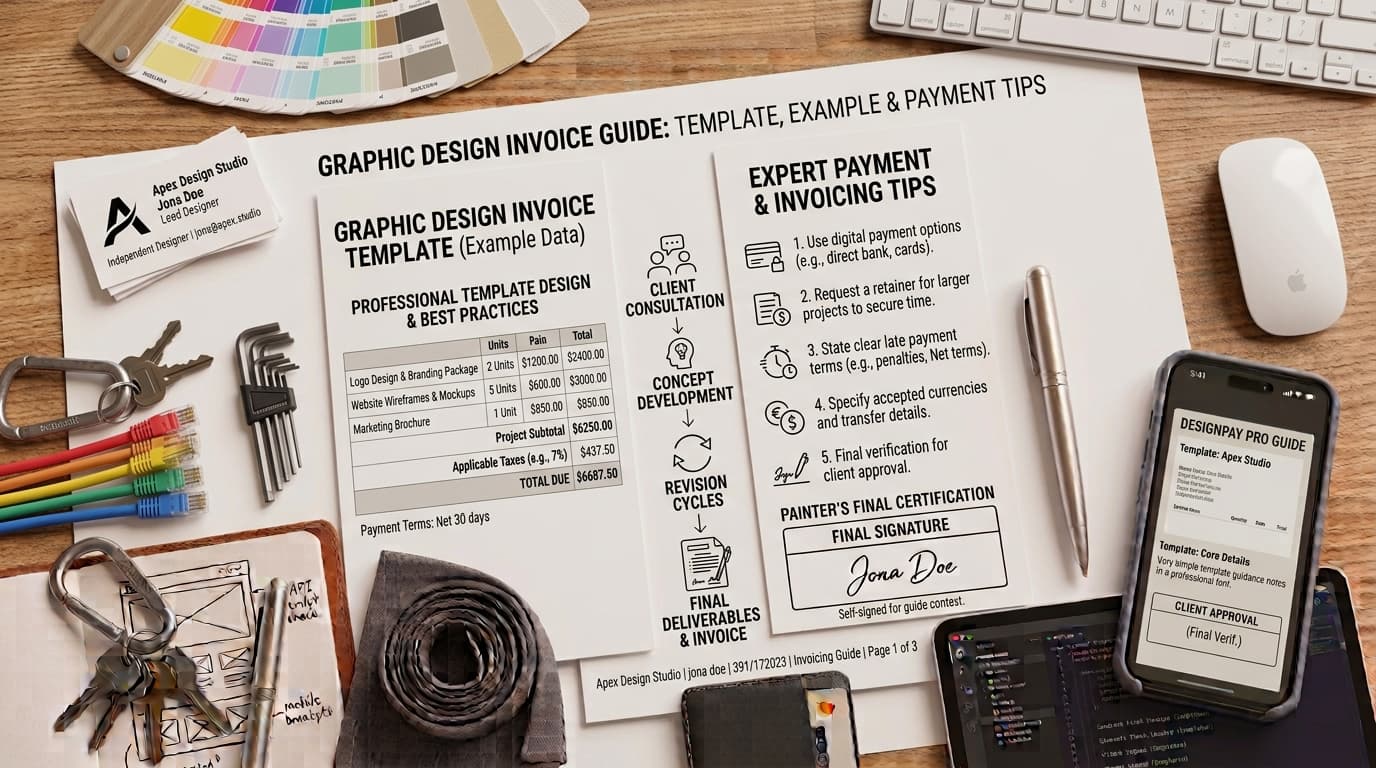
A professional graphic design invoice is a document used to request payment for services rendered. It serves as a record of the transaction between a designer and a client. When you manage your billing process with the same attention to detail you apply to your creative work, you provide your clients with a clear summary of the project status and the amount due.
An invoice is a request for payment based on the terms established in your project agreement. By maintaining a consistent and organized invoicing process, you provide your clients with the information they need to process your payment.
Why a Professional Graphic Design Invoice Matters
For freelancers and small business owners, maintaining accurate records of all income is a standard business practice. A well-structured invoice provides a clear record of the services provided and the corresponding charges. Beyond record-keeping, clear billing is a primary tool for maintaining professional communication.
When an invoice is clear and detailed, clients can easily identify the work being billed. Itemized documentation helps eliminate ambiguity regarding the project scope. If a client understands the services provided and sees that the invoice aligns with the agreed-upon project, they are better positioned to process the payment.
Essential Components of a Graphic Artist Invoice
To ensure your invoice is clear and professional, consider including specific, standardized elements. While there is no single format for an invoice, the following components are common in the industry:
Your Business Information: Include your business name, address, email, and phone number. If you use a logo, placing it at the top of the document can help reinforce your brand identity.
Client Information: State the client’s business name and their primary point of contact.
Invoice Number: Using a unique identifier for each invoice helps both you and your client track specific transactions.
Dates: Clearly display the issue date and the date by which payment is expected. Using a specific date rather than vague terms can help clarify expectations.
Itemized Services: Break down the work performed. Instead of using generic descriptions, list specific deliverables such as "Logo Concept Development" or "Social Media Asset Suite."
Payment Instructions: Provide clear instructions for how the client can submit payment, such as bank transfer details or a link to a payment portal.
If you need to generate a document that includes these professional elements, you can create a graphic design invoice using our streamlined digital tool. This tool allows you to format, preview, print, or download an invoice as a PDF.
How to Structure Your Billing for Creative Work
The way you structure your billing often depends on the nature of your project. Creative work is frequently billed using either a flat fee or an hourly rate.
Flat Fee vs. Hourly Billing
Flat fee billing is often used for projects with a well-defined scope, such as a specific brand identity package. Hourly billing is frequently used for ongoing maintenance, consulting, or projects where the total time required is difficult to predict.
Milestone Billing
For large projects, some designers choose to invoice at specific milestones rather than waiting until the end of the engagement. This approach can help manage cash flow throughout the project lifecycle. A common practice is to request a deposit before work begins, with the remaining balance due upon final delivery. For larger projects, some designers use a split payment structure, such as 33/33/34, to ensure consistent payments as work progresses.
Handling Revisions and Scope Creep
To manage project scope, it is helpful to define the number of revision rounds included in your project fee. For example, your invoice might list "Concept Development" as a flat fee, noting that two rounds of revisions are included in that price. If the client requests additional changes beyond the agreed-upon rounds, you can bill those as a separate line item at your hourly rate. This distinction helps maintain project boundaries and ensures that your time is valued appropriately.
Common Invoicing Practices to Consider
Even experienced designers can encounter challenges that affect the billing process. Here are some common areas to focus on:
Specific Line Items: Listing "design work" can be unclear. Being specific about the deliverables helps the client understand exactly what they are paying for.
Defining Revision Limits: Clearly stating the number of revision rounds in your initial agreement helps prevent scope creep and ensures that the project remains within the planned parameters.
Separating Finances: Keeping your business and personal finances in separate accounts is a standard practice that helps simplify your record-keeping and financial organization.
Timely Invoicing: Sending your invoice promptly upon reaching a milestone or completing a project is a helpful way to keep your financial records current.
Best Practices for Maintaining Financial Health
Beyond the invoice itself, your administrative habits play a role in your success. Consider implementing a standardized workflow for every project. This includes sending a formal estimate before work begins, obtaining a signed agreement, and following up on invoices that are approaching their due date.
Maintaining a digital archive of all your invoices ensures that you are prepared for tax season and can easily reference past project details if a client returns for future work.
Frequently Asked Questions
How do I handle late payments?The best way to handle late payments is to prevent them through clear terms. Include your payment expectations and any late fee policies in your original project agreement. If a payment is missed, send a professional, polite reminder shortly after the due date.
Are design services subject to sales tax?In the United States, tax laws regarding digital services vary significantly by state. Some states tax specific digital products, while others do not tax services at all. Because tax regulations are complex and subject to change, always consult with a local CPA or tax professional to determine your specific obligations.
What is the best way to track my income?Using dedicated accounting software or a spreadsheet to log every invoice sent and payment received is a helpful way to monitor your cash flow. This allows you to identify which clients pay on time and helps you prepare accurate records at the end of the year.
How often should I review my rates?It is a good practice to review your rates periodically. As your skills improve and your portfolio grows, your pricing should reflect the value you provide to your clients.
What if a client asks for source files?The delivery of source files should be defined in your initial project agreement. If they were not included in the original quote, you may choose to bill them as a separate line item or address them as part of your licensing terms.
Disclaimer: This article is for educational purposes only and does not constitute legal, tax, or accounting advice. Always consult with a qualified professional regarding your specific business situation.
Put this into practice
Use the Invoice tool for the calculation, then read What a payment receipt should include for the supporting explanation.