How to Write an Invoice for Payment
Learn how to write an invoice for payment that gets you paid faster. Discover essential elements, professional formatting tips, and best practices for your business.
Published · Updated · By ToolNimbly
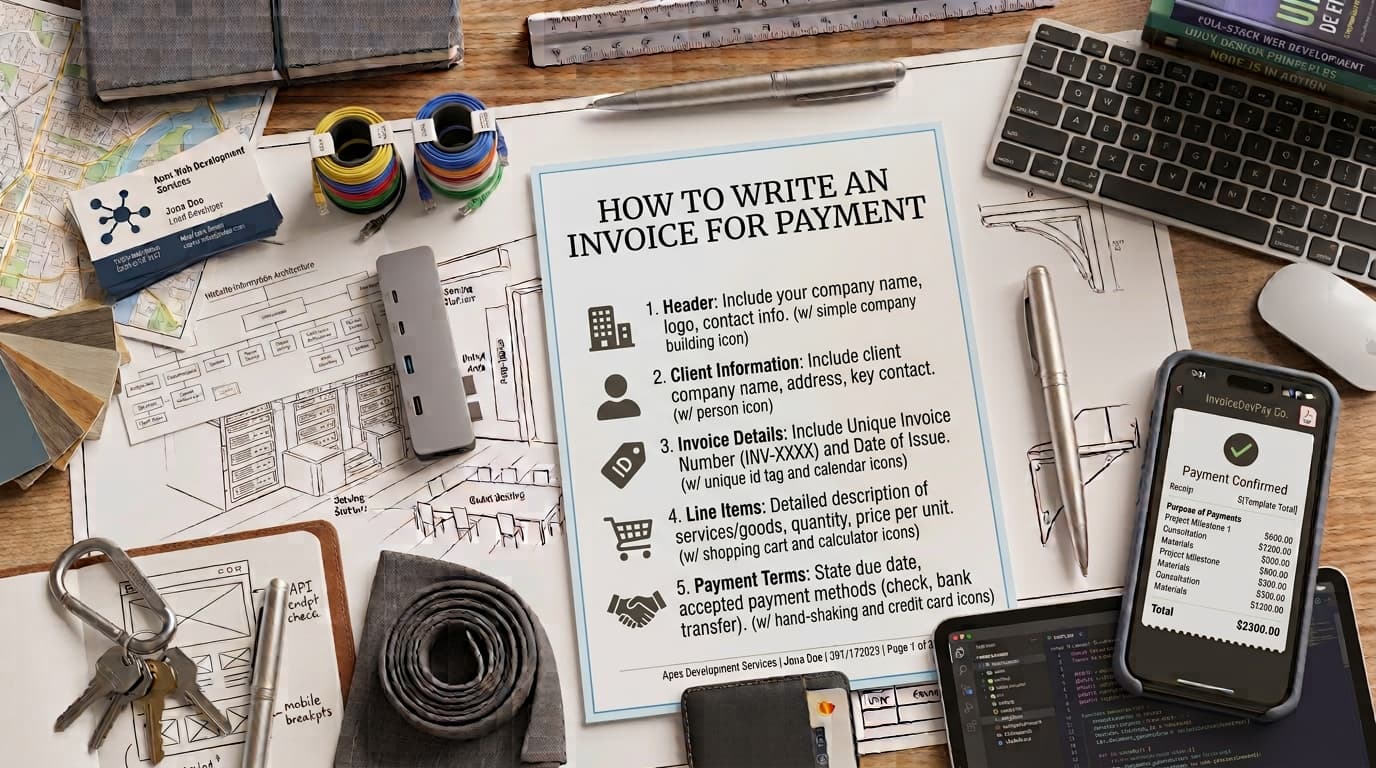
An invoice is a formal document issued by a seller to a buyer. It serves as a record of a transaction, detailing the goods or services provided and the amount requested for payment. For many businesses, the invoice acts as the primary communication tool for finalizing a sale and initiating the payment process.
Learning how to write invoice documents effectively is a practical way to organize your billing workflow. When an invoice is clear and contains the information a client needs to process a payment, it helps maintain professional relationships and supports your internal bookkeeping.
Essential Elements of a Professional Invoice
While business needs vary, most professional invoices include a set of common elements that help both the sender and the recipient track the transaction. Including these details can make your billing process more consistent:
Header: Clearly labeling the document as an "Invoice" helps the recipient identify it immediately.
Contact Information: Including your business name and contact details, along with the name and contact information of your client, ensures the document is directed to the right parties.
Invoice Number: Assigning a unique identifier to every invoice is a standard practice for tracking your records.
Dates: Including the date the invoice was issued and the date payment is expected helps clarify the timeline for the transaction.
Itemization: Listing each product or service on a separate line, including the quantity, unit rate, and a brief description, provides the client with a clear breakdown of the charges.
Financial Summary: Providing a subtotal, any applicable taxes or fees, and the final total amount due summarizes the financial obligation.
Payment Instructions: Explicitly stating how the client should pay, such as via bank transfer or check, provides the necessary information for the client to complete the transaction.
If you are looking for a way to organize these details, you can use our write and generate an invoice tool to create, format, preview, print, or download an invoice as a PDF. This tool allows you to add business and client details, line items, discounts, and tax information while calculating totals using exact decimal arithmetic. It requires no signup and processes data locally in your browser.
Best Practices for Clarity and Communication
Vague descriptions can lead to questions from clients, which may slow down the payment process. Providing specific details about the work performed helps the client understand exactly what they are being billed for.
For example, instead of using a generic term like "Consulting," you might use a more descriptive entry: "Strategic marketing consultation: 5 hours at $150 per hour (October 1 to October 5)." This level of detail provides context, which can be helpful for the client's own internal record-keeping.
Defining Payment Terms
Payment terms define when you expect to receive funds. Common terms include:
Due on Receipt: Payment is requested as soon as the client receives the invoice.
Net 30: Payment is requested within 30 days of the invoice date.
Net 60 or 90: These terms provide longer windows for payment, which are sometimes used in larger business-to-business transactions.
Whatever terms you choose, ensure they are clearly stated on the invoice. If you have a policy regarding late payments, such as interest or fees, communicate these terms clearly to your client before the invoice is issued, often through an initial contract or agreement. Always ensure your policies align with local regulations.
The Importance of Professionalism and Branding
Your invoice is a reflection of your business. A clean, well-designed document signals that you are a serious entity and can contribute to a positive customer experience. Consider adding your company logo, using a consistent color scheme, and ensuring the typography is readable. While the primary goal is to request payment, the invoice is a final touchpoint in the customer journey. A professional, easy-to-read document can encourage repeat business and strengthen your reputation.
Managing Your Invoicing Workflow
Even experienced business owners can encounter challenges if they are not careful with their documentation. One common practice is to maintain a consistent system for numbering your invoices. Using a unique identifier for every invoice you send makes it easier to track which invoices have been processed and which remain outstanding.
If you discover an error on an invoice that has already been sent, avoid attempting to alter the original document. Instead, consider issuing a credit memo or a cancellation invoice to void the original, then issue a new, corrected invoice with its own unique number. This approach helps keep your financial records accurate and transparent.
Furthermore, establishing a system for tracking your accounts receivable is a helpful administrative habit. If an invoice is past due, a polite follow-up email is often an effective way to resolve a forgotten payment.
Record Retention and Organization
Maintaining organized business records is a standard practice for tracking income and expenses. Because invoices are the primary documentation for your income, they should be stored securely and organized in a way that makes them easy to retrieve.
Digital storage is a common choice, as it allows for easier backups and faster retrieval compared to physical paper files. Whether you choose digital or physical storage, consistency is key to ensuring your financial trail is easy for you to follow. Consult with a tax professional to determine the specific record-retention requirements applicable to your business and jurisdiction.
Streamlining Your Process
As your business grows, manual invoicing can become time-consuming. Transitioning to a more structured system can save administrative time. Using tools to organize your layout ensures that your invoices remain professional and consistent. By reducing the manual effort required to create and format your documents, you can focus more on the core activities that drive your business.
Frequently Asked Questions
Is an invoice the same thing as a receipt?
No. An invoice is a document sent to request payment for goods or services. A receipt is provided after the payment has been completed and serves as proof that the transaction has been settled.
What should I do if I sent an invoice with an error?
Do not attempt to alter the original invoice. To maintain a clean record, issue a credit memo or a cancellation invoice to void the incorrect document, then send a new, corrected invoice with a unique number.
How long should I keep my invoices?
Retention periods vary based on your specific business needs and local regulations. It is best to consult with a qualified tax professional to determine how long you should maintain your financial records.
Can I charge interest on late payments?
You can include terms regarding late payments, provided that you have clearly communicated these terms to your client in advance, such as in your initial contract. Always ensure your policies comply with local regulations.
Do I need special software to manage invoices?
You do not need specialized software to manage your invoices. Manual systems are acceptable as long as they meet your record-keeping needs. However, using digital tools can help you organize your layout and reduce the risk of clerical errors.
How should I handle sales tax?
Tax treatment and display requirements vary depending on your location and the nature of your business. It is important to check with the relevant tax authority or a qualified professional to ensure you are documenting and collecting taxes correctly according to your specific business circumstances.
Disclaimer: This information is for educational purposes and does not constitute legal, tax, or accounting advice. Always consult with a qualified professional regarding your specific business circumstances.
Put this into practice
Use the Invoice tool for the calculation, then read What a payment receipt should include for the supporting explanation.