Independent Contractor Invoice Template: Guide and Example
Learn how to create a professional independent contractor invoice. Get our free guide, best practices for billing, and a sample template to ensure timely payments.
Published · Updated · By ToolNimbly
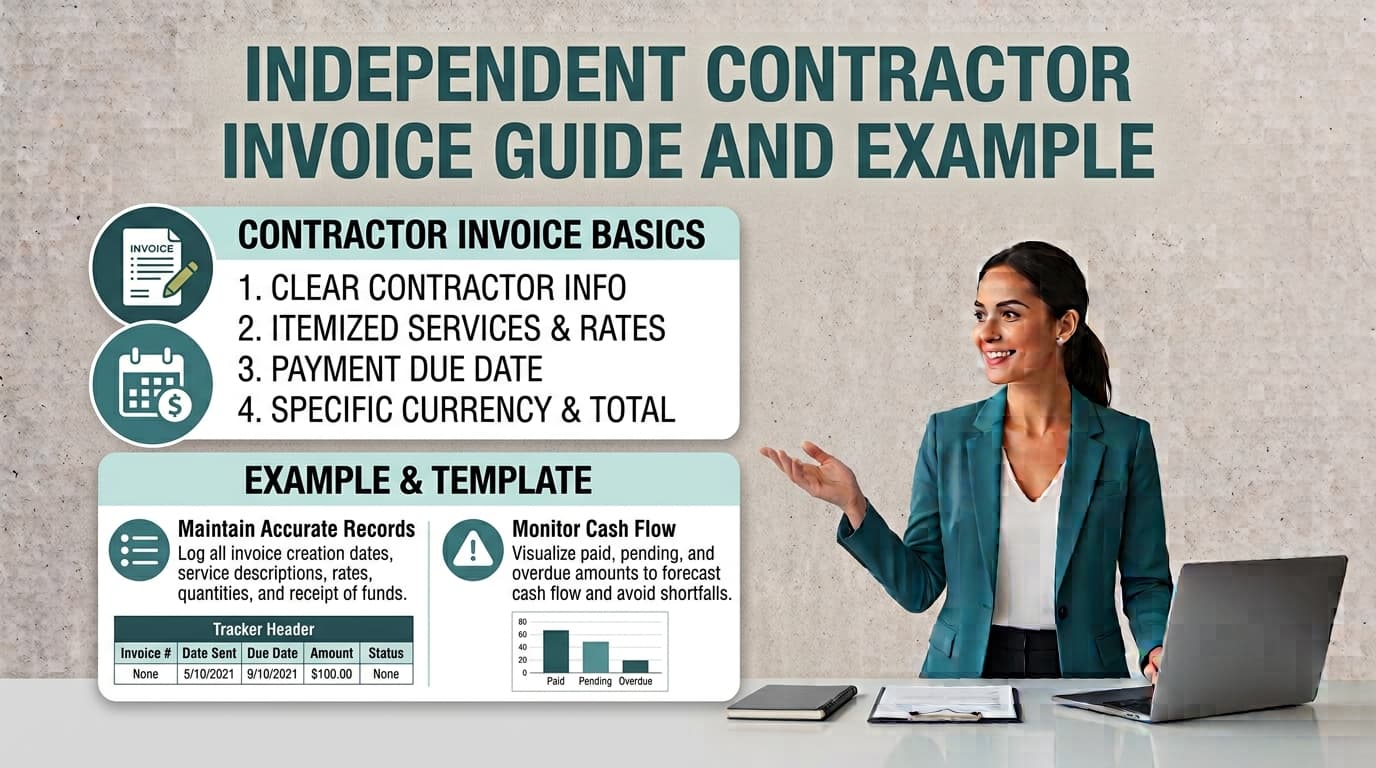
For an independent contractor, an invoice serves as a formal request for payment and a record of services provided. Whether you are a consultant, designer, or freelancer, a well-structured invoice helps communicate your billing details to a client. Maintaining clear records of your business activities is a standard practice for managing your professional income and expenses.
Why a Professional Invoice Matters
An invoice acts as a primary document for tracking the work you have performed and the compensation you expect to receive. By providing a clear, consistent document, you help your clients understand the status of their accounts and the details of the services rendered.
While businesses often use invoices to track payments for their own internal records, including those related to tax reporting, the specific requirements for these documents can vary based on the nature of the business relationship and the jurisdiction. Retaining copies of the invoices you send is a practical way to organize your business history.
Essential Components of an Invoice
A professional invoice is typically clear and concise, providing the information a client needs to process a payment. While there is no single required format, many contractors include the following fields to ensure their billing is easy to read:
Header: Labeling the document as an "INVOICE" helps identify its purpose immediately.
Contractor Information: Including your name, business address, and contact information allows the client to reach you if they have questions about the billing.
Client Information: Stating the client’s business name and the specific contact person or department ensures the document reaches the correct party.
Tracking Details: Assigning a unique invoice number to every document is a practical way to organize your records. Including the date the invoice was issued is also standard practice.
Itemized Services: Providing a breakdown of the work performed helps the client understand the charges. You might list specific deliverables, project phases, or the time spent on particular tasks.
Financial Summary: Clearly stating the subtotal, any applicable fees or taxes, and the final total amount due helps avoid confusion.
Payment Terms and Methods: Explicitly stating when the payment is expected and the methods you accept, such as bank transfers or checks, provides the client with clear instructions.
If you are looking for a straightforward way to organize these details, you can create a contractor invoice to format, preview, print, or download an invoice as a PDF.
Choosing Your Billing Model: Hourly vs. Fixed-Fee
Deciding how to charge for your services is a strategic choice that can influence your workflow and your client's expectations.
Hourly BillingHourly billing is often used for projects where the scope is fluid, such as ongoing maintenance, advisory services, or research. This model provides transparency, as the client pays for the time invested. When using this model, keeping detailed logs of your time is a helpful practice to justify the charges if a client asks for clarification.
Fixed-Fee BillingFixed-fee billing is common for projects with clearly defined deliverables, such as a specific report or a design project. This model provides both you and the client with predictable costs. To manage this effectively, ensure your agreement clearly defines what is included in the fee. If a client requests work outside of the original scope, you may choose to bill those tasks as separate line items.
Reimbursable ExpensesIf your agreement includes the reimbursement of business-related expenses, list these as separate line items on your invoice. Keeping copies of the original receipts is a practical way to provide documentation for these costs.
Sample Independent Contractor Invoice
To visualize how these components fit together, consider the following structure.
[Your Business Name]123 Main Street, City, State, ZIPEmail: [email protected] | Phone: 555-0101
Bill To:Client Name or Business NameAttn: Accounts Payable456 Business Road, City, State, ZIP
Invoice #: INV-2026-001Date: October 12, 2026Due Date: November 11, 2026
Description | Date | Hours/Unit | Rate | Amount |
|---|---|---|---|---|
Project Strategy Consultation | 10/01/26 | 2 | $150 | $300 |
Website UI Design | 10/05/26 | 10 | $150 | $1,500 |
Travel Expenses (Parking) | 10/05/26 | 1 | $25 | $25 |
Subtotal: 1,825.00∗∗TotalAmountDue:∗∗1,825.00∗∗TotalAmountDue:∗∗1,825.00
Payment Instructions: Please remit payment via bank transfer to [Bank Name], Account #XXXX, Routing #XXXX.
Best Practices for Managing Invoices
Managing your billing process effectively can help you maintain a steady workflow and professional relationships.
Standardize Your Terms: Use consistent payment terms, such as "Net 30," and ensure these are communicated clearly in your agreements.
Maintain a Schedule: Sending your invoices promptly upon completing a milestone or at the end of a billing cycle is a practical way to keep your accounts current.
Proactive Communication: If a payment is not received by the expected date, a polite, professional follow-up is a standard way to check on the status of the invoice. Reference the invoice number and the original due date in your correspondence.
Keep Organized Records: Saving a copy of every invoice you send, along with any related agreements or correspondence, is a helpful way to manage your business records.
Advanced Strategies for Managing Finances
Managing your finances as an independent contractor involves more than just sending invoices. Many contractors find that using a dedicated business bank account helps separate personal and professional funds, which simplifies the process of tracking income and expenses.
For larger projects, you might consider requesting a deposit or an upfront payment. This practice can help cover initial costs and demonstrates the client's commitment to the project. For long-term engagements, billing on a recurring schedule, such as the first of every month, can help create a more predictable income stream.
Navigating Tax and Regulatory Obligations
As an independent contractor, you are responsible for managing your own tax obligations. Because tax requirements, including those related to estimated payments, sales tax, and reporting thresholds, vary significantly by state and the nature of your work, it is important to consult with a qualified tax professional. They can provide guidance on your specific situation and help you understand your responsibilities regarding federal and state tax filings.
Frequently Asked Questions
Do I need to charge sales tax on my invoices?Tax treatment for professional services varies by state and the specific nature of your work. Some jurisdictions may have different requirements for digital goods or technical services. You should check with your state’s department of revenue or a tax professional to confirm your obligations.
What should I do if a client does not pay?Review your agreement to ensure you have fulfilled your obligations. Send a polite follow-up requesting a status update. Maintaining a professional tone in all correspondence is a best practice, as your invoices and agreements serve as the foundation for your business relationship.
How can I make my invoices look more professional?Consistency is helpful. Use a clean, readable font and ensure the layout is easy to navigate. Using a standardized template ensures that your branding remains consistent across all client communications, which reinforces your professional image.
Disclaimer: This information is for educational purposes only and does not constitute legal, tax, or financial advice. Always consult with a qualified professional regarding your specific business situation and local laws.
Put this into practice
Use the Invoice tool for the calculation, then read How extra loan payments save interest for the supporting explanation.