Moving Company Invoice Template: Guide and Example
Learn how to create a professional moving company invoice template. Ensure compliance, itemize services, and reduce payment disputes with our expert guide.
Published · Updated · By ToolNimbly
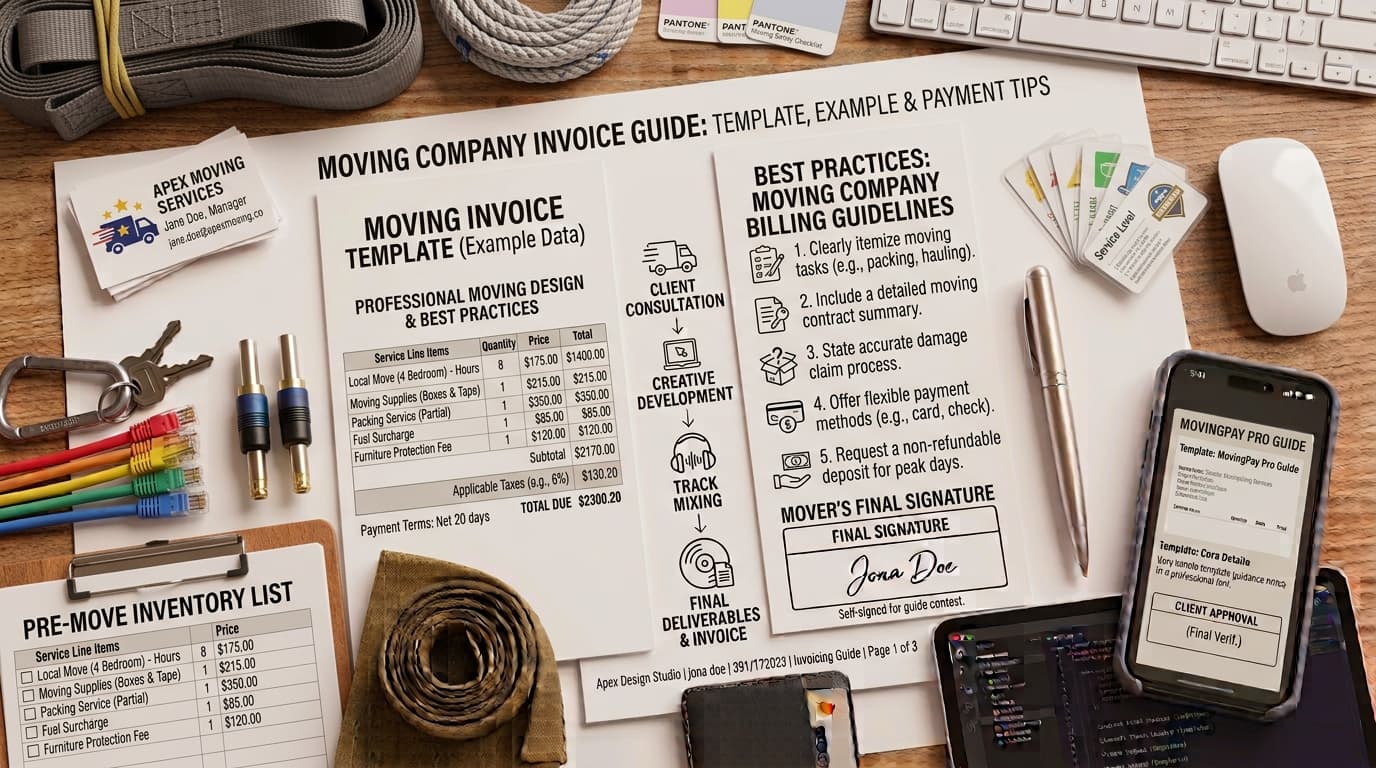
Professional billing is a central component of the moving process. A clear, well-structured invoice provides the client with a summary of the services provided and the associated costs. By presenting a transparent document, you help the client understand the charges, which supports a professional business relationship.
Why Your Moving Invoice Needs More Than Just a Total
In the moving industry, clarity is essential for effective communication. When a client receives a bill that only displays a single total amount, they may have questions regarding the specific services rendered. A detailed, itemized invoice serves as a clear record of the work completed and the agreed-upon services.
Beyond customer service, the invoice acts as a primary business record. It should align with the Bill of Lading (BOL), which serves as the contract of carriage for the move. The invoice is the instrument used to request payment for the financial obligations established in that contract. By providing a transparent breakdown of services, you minimize the confusion that can lead to payment delays.
Essential Components of a Moving Invoice
To be effective, your moving company invoice template should include specific identifiers. These elements ensure the customer knows exactly who they are paying and provide the documentation needed for your own internal accounting.
Business Identity: Include your legal business name, any "Doing Business As" (DBA) names, your physical office address, a reachable phone number, and a professional email address.
Regulatory Identifiers: If you operate as an interstate household goods carrier, you may need to display your USDOT number and MC number on your shipping documents and invoices. Consult the Federal Motor Carrier Safety Administration (FMCSA) for specific requirements regarding your operations.
Contract Reference: Including the BOL number provides a direct link between the services rendered and the original service agreement.
Valuation Coverage: Documenting the level of liability the customer selected, such as Released Value or Full Value Protection, helps manage expectations regarding the scope of coverage for the move.
Payment Terms: Clearly define the due date and accepted payment methods. Many moving companies operate on a Collect on Delivery (COD) basis, which should be explicitly stated on the document.
How to Itemize Moving Services
The process of collection is often smoother when the invoice is granular. Avoid using vague labels. Instead, break down every charge into logical, descriptive line items.
Labor Costs
Clearly state the crew size, the number of hours worked, and the hourly rate. If you charge different rates for regular time versus overtime, list these as separate line items to provide a clear view of how the labor total was calculated.
Truck and Travel
Travel charges are a common area for questions. Whether you charge a flat trip fee or use a specific drive time model, be transparent. If you charge for fuel, list it separately from the truck rental or usage fee so the client can see exactly what they are paying for.
Packing Materials
List each type of material used, the quantity, and the unit price. For example, "10 Medium Moving Boxes at $3.00 each" provides a clear justification for material costs that might otherwise seem arbitrary to a customer.
Accessorial Services
Moving often involves specific challenges that require additional effort. If the move involved specific tasks, list them clearly:
Stairs: Fees for multiple flights of stairs.
Long Carries: Charges for distances exceeding a set threshold, such as 75 feet.
Elevator Usage: Specific fees for navigating building elevators.
Shuttle Services: Costs for using a smaller vehicle when the main moving truck cannot access the property.
Storage-in-Transit (SIT)
If you are holding goods in storage, treat SIT as a distinct line item. Include the date range for the storage period and the daily or monthly rate applied.
Streamlining Your Billing Process
Efficiency in billing impacts your cash flow. A best practice is to finalize and present the invoice upon delivery. When the work is fresh in the customer's mind and they have just seen the crew complete the job, they are more likely to review the invoice promptly.
To manage this, you need a reliable method to structure your data. You can make a moving invoice using digital tools that allow you to add, remove, and reorder line items to match the unique requirements of each move. These tools allow you to input your business details, calculate subtotals and balances using precise arithmetic, and generate a professional PDF that can be printed or downloaded.
Because these generators process data locally, you maintain control over your information. When you use a consistent template, you ensure that every invoice you send reflects the same professional standard.
Addressing Common Questions
What is the difference between an invoice and a Bill of Lading?The Bill of Lading is your contract of carriage. It details the inventory, the scope of work, and the terms of the move. The invoice is the billing document that requests payment for those services. Both should be consistent to ensure your business records remain accurate.
Do I need to include sales tax on my moving invoice?Tax requirements vary significantly by location. Some jurisdictions tax the entire moving service, others only tax the materials, and some exempt residential moves entirely. You must consult your local Department of Transportation or state tax authority to determine the specific regulations for your jurisdiction.
What if a customer disputes the final invoice?The best approach to managing disputes is to maintain a signed BOL and a detailed, itemized invoice. Always have the customer sign off on the final hours, the condition of the items, and the services rendered at the time of delivery. This documentation serves as your record that the work was completed as agreed.
Best Practices for Invoice Organization
Maintaining an organized billing system is essential for any moving company. Beyond the content of the invoice, consider these operational habits to keep your records in order:
Standardize Your Layout: Use a consistent template for every client. This helps your team quickly identify key information and ensures that your brand appears professional and reliable.
Use Clear Descriptions: Every line item should be self-explanatory. If a client sees "Misc Fee," they are likely to ask for clarification. If they see "Long Carry Fee (100 ft)," the charge is immediately justified.
Verify Calculations: Before sending an invoice, double-check the math. Ensure that the subtotal, any applicable taxes or fees, and the final balance due are accurate. Using a digital tool can help ensure that your arithmetic is precise.
Include Payment Instructions: Clearly state how the customer can pay. Whether you accept checks, credit cards, or bank transfers, provide the necessary details so the customer knows exactly how to settle the balance.
Keep Digital Copies: Even if you provide a printed invoice to the customer, keep a digital copy for your own records. This makes it easier to track payments and reference past jobs if a customer calls with questions later.
Review Regularly: Periodically review your invoice template to ensure it still meets your business needs. As your company grows or your service offerings change, you may need to update your line items or terms.
Managing Client Expectations
Communication is the foundation of a successful move. By setting expectations early, you reduce the likelihood of surprises when the final invoice is presented.
Pre-Move Estimates: Provide a clear estimate before the move begins. This gives the customer an idea of what to expect and allows you to discuss any potential additional charges, such as long carries or shuttle services, before they occur.
Transparency During the Move: If unexpected challenges arise during the move, such as a long carry that was not initially identified, communicate this to the customer as soon as possible. Getting their acknowledgment at the time of the service helps prevent disputes when the final bill is presented.
Final Walkthrough: Before the crew leaves, perform a final walkthrough with the customer. This is the perfect time to confirm that all services were performed and to have the customer sign off on the final hours and any additional charges.
By following these practices, you create a professional billing experience that reflects the quality of your moving services. A clear, accurate, and itemized invoice is a powerful tool for building trust and ensuring that your business operations run smoothly.
Operational Considerations for Moving Invoices
When building your invoice, consider the following workflow tips to maintain professional standards:
Unique Identifiers: While not always legally required, assigning a unique invoice number to every document is a standard bookkeeping practice that helps you track payments and reconcile your accounts.
Visual Templates: Using a clean, professional layout helps your clients read the document quickly. Digital tools often provide multiple templates that allow you to present your information in a way that aligns with your brand.
Local Data Processing: When using digital tools, prioritize solutions that keep your data private. Tools that process information locally in your browser ensure that your client data remains under your control.
Documenting Adjustments: If a discount or a fee adjustment is applied, ensure it is clearly labeled as a separate line item. This transparency prevents confusion regarding the final balance due.
Professional Presentation: Ensure your invoice is easy to read. If you choose to include a company logo, ensure it is high-resolution and placed in a way that does not obscure the critical billing information.
By focusing on these details, you can create a billing process that is both efficient for your team and clear for your customers. Remember that the goal of the invoice is to provide a final, transparent summary of the services provided, which in turn supports a positive end to the moving experience. Always consult with a professional accountant or legal advisor if you have specific questions regarding your business's financial or regulatory obligations.
Put this into practice
Use the Invoice tool for the calculation, then read What a payment receipt should include for the supporting explanation.