Pro Forma Invoice Template: What It Is and How to Use It
Learn what a pro forma invoice is, how it differs from a final invoice, and when to use one in your business. Get tips on creating accurate, professional documents.
Published · Updated · By ToolNimbly
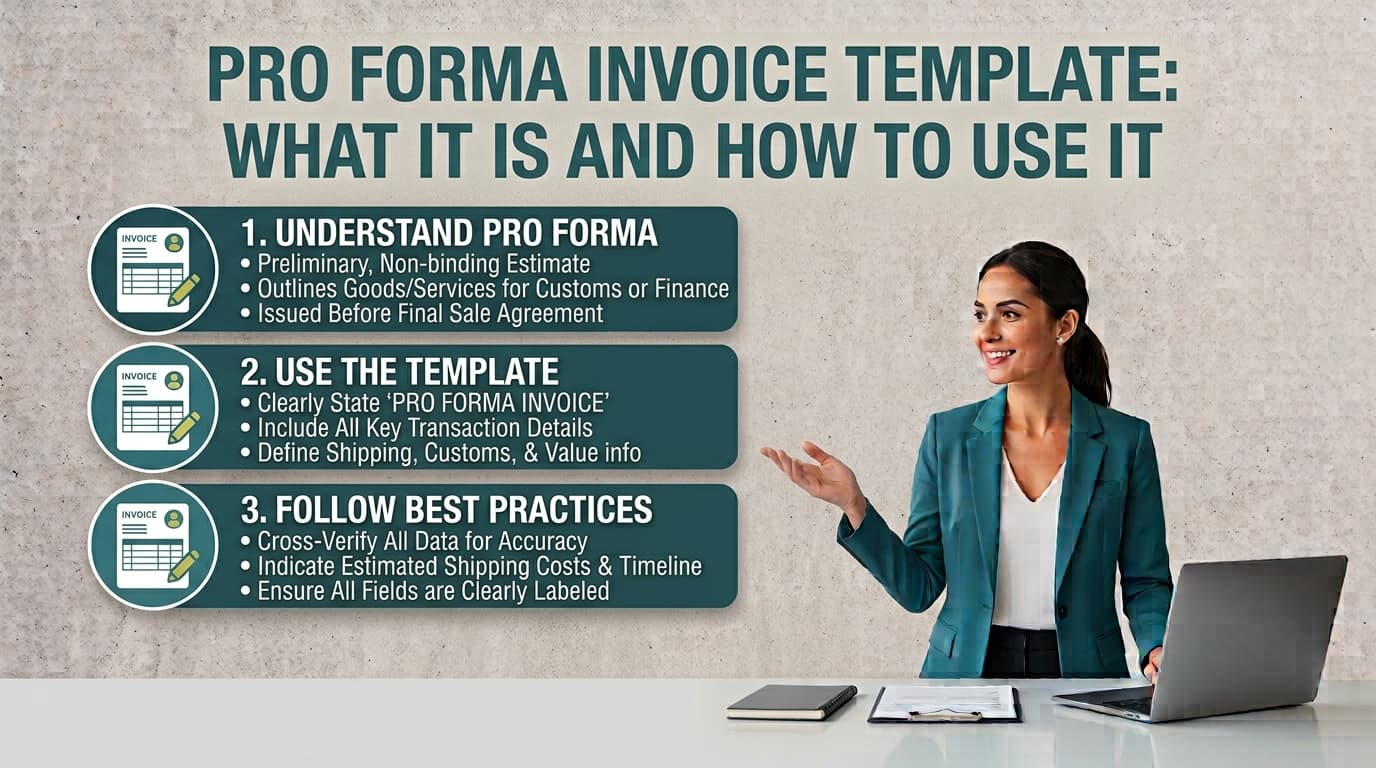
A pro forma invoice is a preliminary document issued by a seller to a buyer before a transaction is finalized. Derived from the Latin term meaning "for the sake of form," it functions as a formal declaration of the goods or services to be provided and their associated costs.
A pro forma invoice is not a demand for payment. It is a document used to outline the terms of a potential sale. By utilizing a professional proforma invoice template, businesses can provide the information necessary to facilitate their administrative processes.
When Should You Use a Pro Forma Invoice?
Businesses use this document to facilitate administrative processes that occur before the actual fulfillment of an order. Common scenarios include:
International Trade: Customs authorities may request a pro forma invoice to assess goods. It provides details for shipping documentation before a commercial invoice is generated.
Requesting Advance Payments: If a business requires a deposit or a down payment to begin work or secure inventory, a pro forma invoice serves as a request for that capital.
Internal Approvals: In B2B transactions, a buyer may need a formal document to secure internal budget approval or to generate a purchase order. Providing this document helps the buyer navigate their own procurement process.
Sales Negotiations: When a client needs a clear, itemized breakdown of costs before committing to a purchase, this document provides a structured framework for the agreement.
Essential Elements of a Pro Forma Invoice
To be effective, your document should be clear and comprehensive. Using a consistent proforma invoice template helps ensure that customs officials and clients can identify the nature of the transaction. Consider including the following elements:
Clear Labeling: The document should be explicitly titled "Pro Forma Invoice" at the top to distinguish it from a final commercial invoice.
Detailed Breakdown: List all goods or services, including unit prices, quantities, and the total amount.
Shipping and Incoterms: For international shipments, include specific Incoterms to define the responsibilities of both the buyer and the seller regarding delivery, insurance, and risk.
Validity Period: Specify how long the prices and terms outlined in the document remain valid.
Administrative Details: Include the contact information for both the buyer and the seller, the date of issue, and a unique reference number. Using a reference number distinct from your final invoice numbering system can help prevent confusion.
How to Create Your Document
Creating a professional document is straightforward if you maintain a clean, standardized layout. When drafting your proforma invoice template, keep in mind that final, commercial invoices typically follow a different numbering sequence.
Draft the Details: Input the buyer and seller information, the itemized list, and the terms of the agreement.
Verify Accuracy: Ensure all international shipping details and cost estimations are accurate to assist with customs processes.
Finalize the Transaction: Once the buyer accepts the terms and the goods are shipped or services are rendered, you may issue a final commercial invoice. You can generate a standard invoice to finalize the sale and record the transaction in your records.
The Strategic Value of Using a Template
Relying on a pre-built proforma invoice template offers several advantages for growing businesses. First, it ensures consistency. When every document follows the same structure, your team spends less time formatting and more time focusing on core business activities. Second, it reduces the likelihood of errors. By using a template that includes all required fields, you minimize the risk of missing critical information like shipping terms, which can lead to delays in international logistics.
Furthermore, a well-designed template enhances your brand image. A professional, clean, and easy-to-read document signals to your clients that you are organized and reliable. Whether you are a freelancer or a large enterprise, having a standardized approach to your preliminary documentation is a hallmark of operational excellence.
Common Mistakes to Avoid
Misusing pro forma documentation can lead to administrative and organizational issues. Avoid these common pitfalls:
Recording as Revenue: A pro forma invoice is not a final sale document. Recording it as an actual sale in your accounting software can lead to incorrect financial reporting.
Failing to Replace the Document: If you are importing goods into the United States, be aware that while a pro forma invoice may be used for initial customs clearance, you are still responsible for providing a final commercial invoice.
Confusing with Quotes: While both are preliminary, a pro forma invoice is a more formal, structured document. A price quote is typically less detailed and is used primarily for initial negotiations, whereas a pro forma invoice is designed for administrative and customs purposes.
Best Practices for Maintaining Organization
To ensure your business remains organized, keep a record of the pro forma invoices you issue. While they are not final accounting documents, they are essential for tracking the history of a deal. If a question arises regarding the terms of a sale, having a copy of the original pro forma document can be helpful.
Additionally, ensure that your team understands the difference between a pro forma invoice and a commercial invoice. Training your staff to use the correct terminology and document types prevents accidental reporting errors. If you find that your business frequently requires these documents, consider integrating a digital template into your CRM or project management software to streamline the process further.
Frequently Asked Questions
Is a pro forma invoice a contract?It is not a demand for payment or a contract of sale. However, if the document is signed or accepted by the buyer, it may serve as an agreement on the terms of the potential sale.
How does it differ from a price quote?A price quote is a rough estimate provided during the negotiation phase. A pro forma invoice is a formal, structured document that provides a comprehensive breakdown of the transaction, intended for administrative use, customs, or deposit requests.
When do I replace it with a final invoice?You should issue a final commercial invoice once the sale is confirmed, the goods have been shipped, or the services have been completed. This final document is the one that triggers the payment obligation.
What happens if the terms change after issuing a pro forma invoice?If the terms of the sale change, you should issue an updated pro forma invoice to the buyer. This ensures both parties are aligned on the current pricing and conditions before the final transaction occurs.
Does ToolNimbly provide tax or legal advice?No. ToolNimbly does not provide legal, tax, or accounting advice. The invoice generator tool allows you to create, format, preview, print, or download an invoice as a PDF. It does not maintain an automatic numbering sequence, a server-side client database, cross-device history, currency conversion, or a guarantee of legal or tax compliance.
Disclaimer: This article is for informational purposes only and does not constitute legal, tax, or accounting advice. Tax treatment and display requirements vary by jurisdiction; always consult with a qualified professional regarding your specific business requirements and compliance obligations.
Put this into practice
Use the Invoice tool for the calculation, then read What an invoice needs to contain for the supporting explanation.