What Is a Commercial Invoice? Requirements and Example
Confused by international shipping documents? Learn what is a commercial invoice, how it differs from a sales invoice, and the key fields required for US Customs.
Published · Updated · By ToolNimbly
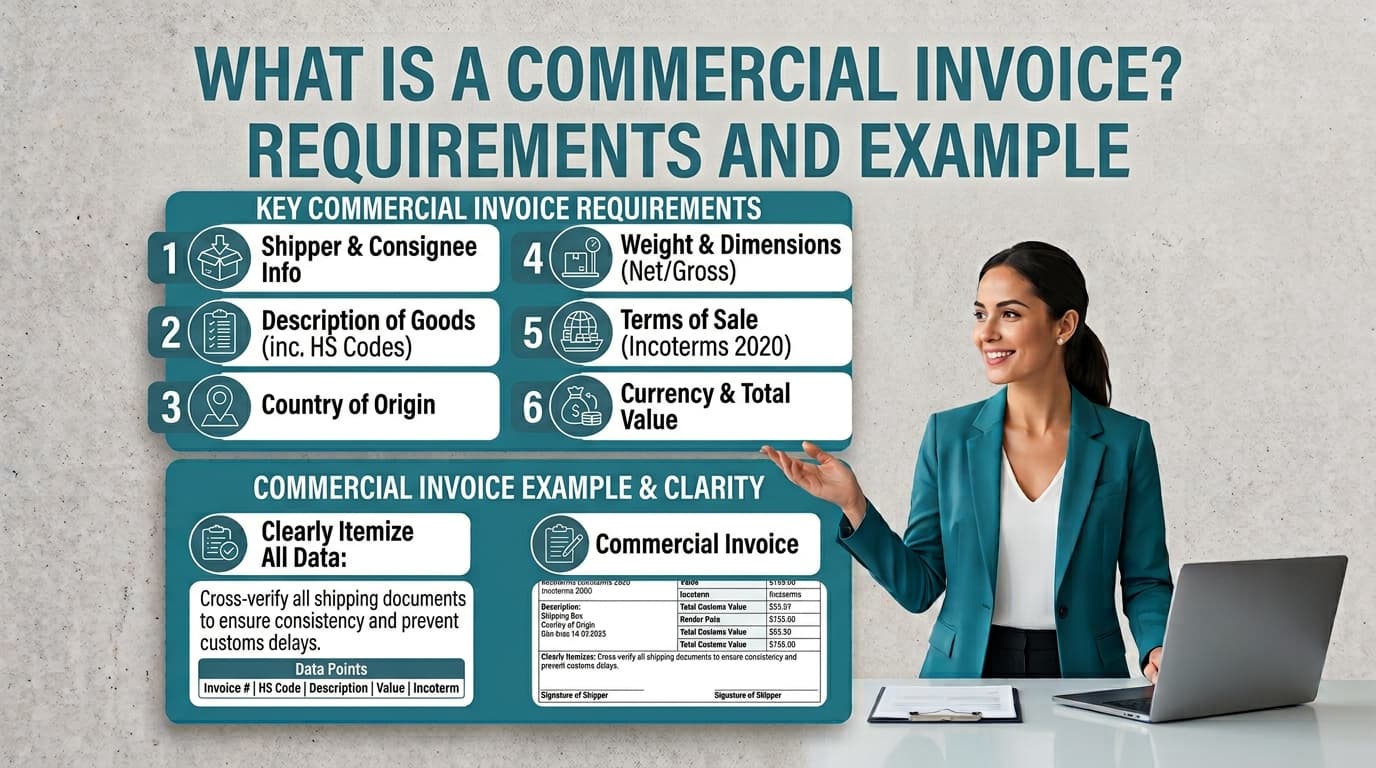
A commercial invoice is a document used in international trade to provide information about a shipment of goods. It is a primary document used by customs authorities to understand the nature of the items being imported, their value, and their origin. This information is used to assist in the assessment of duties and the application of tariff classifications.
When shipping goods across international borders, providing clear and accurate documentation is a standard practice to help facilitate the movement of cargo. While the specific requirements for documentation can vary depending on the destination country and the type of goods, the commercial invoice serves as a central record for the transaction between the exporter and the importer.
Commercial Invoice vs. Sales Invoice: Key Differences
Exporters and importers often distinguish between a standard sales invoice and a commercial invoice. A sales invoice is typically used as an accounting tool to request payment between a buyer and a seller, focusing on the commercial terms of the transaction.
A commercial invoice, while it contains pricing information, is designed to provide the specific data points needed for customs processing. It bridges the gap between a private business transaction and the information requirements of customs authorities. While a domestic sales invoice might focus solely on the total amount due and payment terms, a commercial invoice includes technical details such as the country of origin and specific product descriptions that are necessary for international shipping.
Essential Information for a Commercial Invoice
There is no single, universally mandated form for a commercial invoice. Businesses often design their own documents to ensure they include the information necessary for their specific trade requirements. If you are preparing to ship goods and need a document to organize your transaction details, you can create an invoice online to format, preview, print, or download an invoice as a PDF.
When preparing a commercial invoice, it is common to include the following information to help provide clarity for customs officials and logistics partners:
Full Legal Names and Addresses: Include the complete contact information for both the buyer (importer) and the seller (exporter).
Invoice Number and Date: Unique identifiers help both parties track the shipment and maintain organized records.
Detailed Description of Goods: Avoid vague terms. Use specific commercial names, materials, and intended uses to describe each item.
Classification Codes: Including the correct Harmonized Tariff Schedule (HTS) code for each line item can help in identifying the goods for tariff purposes.
Country of Origin: Clearly state where the goods were manufactured or underwent their last substantial transformation.
Quantity and Unit Price: List the exact count and the price per unit for each item.
Total Value: The total amount of the transaction.
Currency: Specify the currency used for the transaction, such as USD.
Incoterms: Clearly state the agreed upon Incoterm, such as FOB, CIF, or DDP. This helps define the responsibilities for freight, insurance, and risk.
Itemized Costs: List freight, insurance, and packing costs separately if they are not already included in the unit price.
Signature: The document is often signed by an individual with knowledge of the transaction to verify the information provided.
Why Accuracy Matters for Shipping
Customs authorities prioritize consistency across shipping documents. Discrepancies between the commercial invoice, the packing list, and the bill of lading are common reasons for delays or requests for further information. If the weight or value listed on the invoice does not match the information provided by the carrier, it may lead to additional scrutiny.
Specificity is also important. For example, describing an item as "electronics" provides little information to a customs officer. A more descriptive entry, such as "Lithium ion battery powered handheld vacuum cleaner, 12V," provides a clearer picture of the goods. This level of detail helps in the correct application of duties and prevents the misclassification of items.
The Role of the Importer of Record
The importer of record is the entity responsible for ensuring that imported goods are documented correctly. When you act as the importer of record, you are responsible for the information provided on the commercial invoice. It is important to ensure that the invoice reflects the actual transaction value of the goods. Maintaining transparency in your documentation is a standard practice in international trade.
Digital Transformation and Modern Documentation
Many businesses are transitioning from paper-based processes to digital documentation. Electronic commercial invoices can be integrated into various shipping and logistics workflows, which may help reduce the risk of manual data entry errors.
When using digital systems, it is helpful to ensure that your software is updated to reflect current information. Because trade requirements can change, relying on outdated templates or manual spreadsheets can lead to inconsistencies. Using a dedicated tool for your documentation helps maintain a consistent format across your shipments.
Frequently Asked Questions
Is there a government mandated form for a commercial invoice?There is no single, universally required layout or template. You may use any format that clearly presents the necessary data points required for your specific shipment and destination.
Can I use a packing list instead of a commercial invoice?These documents serve different purposes. A packing list details the physical characteristics of the shipment, such as dimensions, weight, and contents per package. It does not typically contain the financial and transaction data required for customs entry. It is common to provide both documents to ensure a complete record of the shipment.
What happens if my commercial invoice is missing information?If a commercial invoice is missing required data, customs authorities may hold the shipment for inspection. This can result in administrative delays or requests for additional documentation. Ensuring that all fields are completed accurately before the shipment leaves can help minimize these risks.
How do I determine the correct HTS code for my goods?The Harmonized Tariff Schedule is a complex system. You can search the official HTS database on the US International Trade Commission website. If you are unsure about a classification, it is recommended to consult with a licensed customs broker who can provide professional guidance based on the specific nature of your products.
Practical Tips for Invoice Management
When managing your shipping documentation, consider the following practices:
Maintain Consistent Records: Keep copies of your commercial invoices and all related shipping documents for your own records. This is a standard business practice that helps with tracking and auditing your own shipments.
Verify Information: Before finalizing your invoice, double-check that the buyer and seller details, quantities, and values match your purchase orders and other shipping documents.
Use Clear Formatting: A well-organized document is easier for customs officials and logistics partners to read. Ensure that your invoice is legible and that all line items are clearly separated.
Consult Professionals: If you are new to international trade, working with a customs broker can provide you with valuable insights into the specific requirements for your industry and the countries you are trading with.
Review Regularly: Trade regulations and requirements can change. Periodically review your documentation process to ensure it remains aligned with current industry standards.
Disclaimer: This information is for educational purposes only and does not constitute legal, tax, or customs advice. International trade regulations can be complex and change frequently based on the commodity and the countries involved. Always consult with a licensed customs broker or legal professional to ensure your specific shipments are fully compliant with applicable laws.
Put this into practice
Use the Invoice tool for the calculation, then read What an invoice needs to contain for the supporting explanation.