What Is an Invoice Number? Examples and Numbering Rules
Confused about what is an invoice number? Learn how to create a professional, audit-ready numbering system for your small business with our simple guide.
Published · Updated · By ToolNimbly
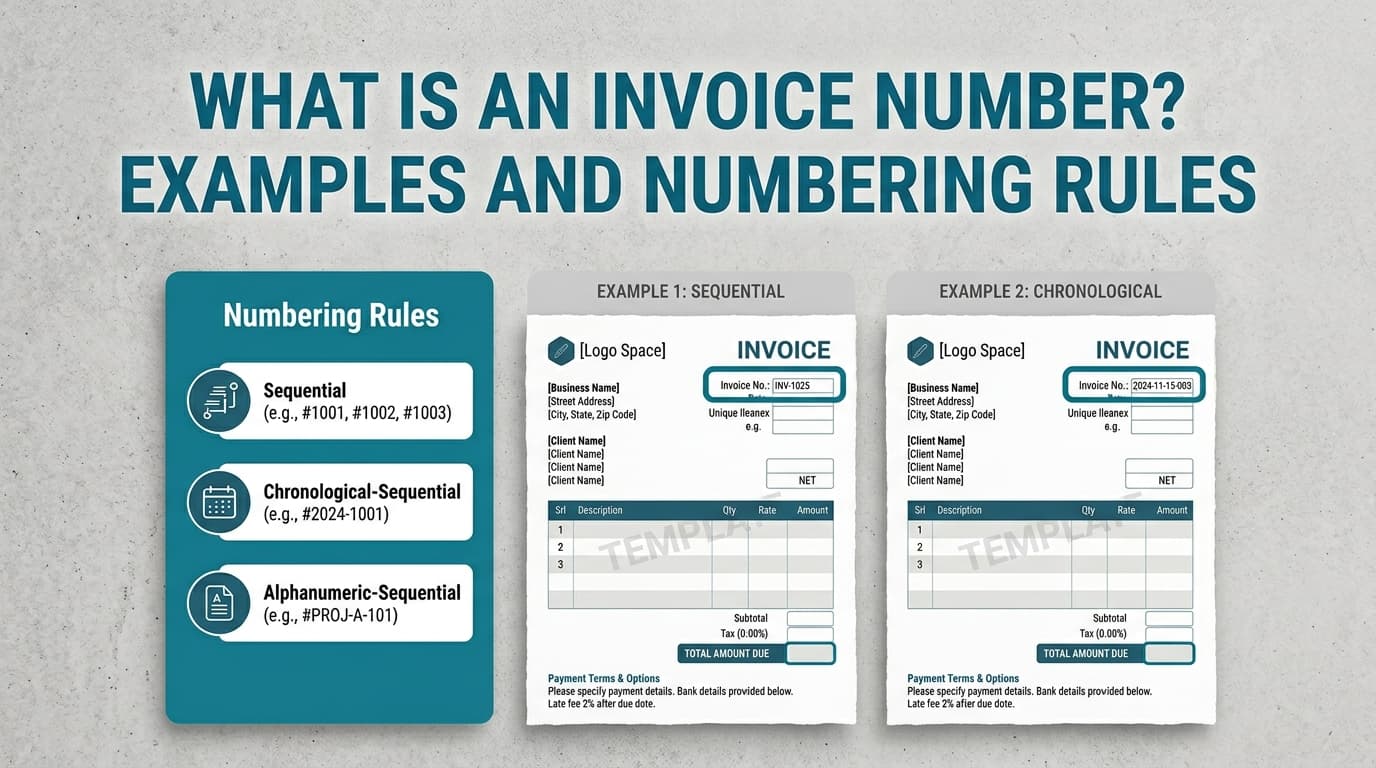
An invoice number is a unique, alphanumeric identifier assigned to a specific request for payment. It serves as a primary reference point for both the sender and the recipient, acting as a record for a transaction. While the concept is straightforward, the way you implement invoice numbers can influence your internal bookkeeping and the clarity of your financial records.
Why Your Numbering System Matters
Beyond basic record keeping, your numbering strategy reflects your operational approach.
ProfessionalismStarting your very first invoice at 001 can signal to clients that you are a new business. Many entrepreneurs choose to start at a higher number, such as 1001, to create a sense of established operations. The specific starting point matters less than the consistency of the sequence that follows. A predictable numbering scheme helps clients reference specific documents when they have questions or are processing payments.
Record OrganizationDuring tax season, a disorganized filing system can be a challenge. If your invoices lack a consistent, sequential identifier, you may struggle to reconcile payments or track the status of your billing. A robust system creates a clear trail, allowing you to identify paid or outstanding invoices. When reviewing your books, a clean, sequential system helps you manage your finances with clarity.
ScalabilityAs your business grows, you may move from manual spreadsheets to accounting software. If your early numbering system is inconsistent, migrating your data can become an administrative hurdle. Establishing a clean, scalable format early on helps ensure that your financial data remains organized as you scale your operations.
Common Invoice Numbering Formats
When deciding how to create an invoice number, prioritize clarity and chronological sorting. Using leading zeros is a simple way to ensure your digital files sort correctly in your computer folders. For example, using 001 instead of 1 prevents your computer from sorting 10 before 2.
Consider these three common approaches:
Simple Sequential: This is a straightforward method, using a progression like 001, 002, 003. This works well for businesses with a lower volume of transactions.
Year Prefixed: Many businesses prefer a format like 2025-001 or 2025-002. This keeps your records organized by fiscal year, making it easier to pull documents for annual reviews.
Client or Project Coded: If you manage multiple clients or distinct projects, you might use a format like ABC-2025-001. This allows you to identify which client or project the invoice belongs to at a glance.
If you are looking for a way to organize your billing, you can use the ToolNimbly invoice generator to create, format, preview, print, or download an invoice as a PDF.
Best Practices and Avoiding Common Mistakes
The most important rule in invoicing is to maintain a unique identifier for every document. Once a number is assigned, it should be linked to that specific transaction.
Never Reuse NumbersReusing an invoice number, even if an invoice was cancelled or voided, creates confusion in your ledger. It makes it difficult to distinguish between the original document and a replacement. If you need to cancel an invoice, keep the original record for your files and issue a new document with a new number.
Handling MistakesIf you make a mistake on an invoice that has already been sent to a client, do not simply delete the record. Instead, issue a credit note or a corrected invoice with a new number. This maintains a complete and transparent paper trail that is helpful for your internal records.
Consistency is KeyAvoid changing your numbering format mid-year. If you decide to switch from a simple sequence to a year-prefixed format, do so at the start of a new fiscal year. Changing conventions halfway through the year can lead to duplicate numbers or gaps that complicate your end-of-year accounting.
Special Considerations for Specific Business Types
While many businesses have flexibility in how they format their invoices, your specific business model may dictate certain requirements.
International ClientsIf you invoice clients in jurisdictions that use Value Added Tax (VAT) or Goods and Services Tax (GST), such as the European Union, the UK, or Australia, you should verify the specific requirements for your region. These tax authorities often have specific rules regarding how invoices are issued and numbered to verify compliance and prevent errors.
Government ContractingBusinesses that work with federal agencies must comply with the Federal Acquisition Regulation (FAR). These regulations often impose specific alphanumeric constraints on how invoices are submitted. If you are a government contractor, always review your specific contract terms, as they may override standard commercial practices for invoice formatting.
The Role of Organization in Invoicing
Manual data entry is a source of errors in small business accounting. When you manually type invoice numbers, it is easy to skip a digit, repeat a number, or lose track of the sequence. Using a consistent system helps mitigate these risks.
By using dedicated tools, you ensure that every invoice is unique and that your records remain in order. This not only saves time but also provides clarity during tax season. When your system handles the numbering, you can focus on your business operations rather than managing administrative minutiae.
Frequently Asked Questions
What should I do if I accidentally skip an invoice number?Do not attempt to retroactively fix the gap by deleting or modifying other invoices. Simply continue with the next number in your sequence. A minor gap is usually easy to explain to an accountant, whereas altering your records to hide a mistake is more problematic.
Can I start my invoice numbers at 1000?Yes. Starting your sequence at a higher number, such as 1000 or 1001, is a common practice. It helps your business appear more established and avoids the aesthetic of being a brand new operation.
How do I handle recurring invoices?For recurring invoices, you should assign a unique number to each instance. Even if the amount and the client are the same, each payment request is a separate transaction and requires its own unique identifier to ensure your ledger remains accurate.
Should I include letters in my invoice numbers?You can include letters if they serve a purpose, such as identifying a specific department or project. However, keep the alphanumeric code simple. Overly complex codes can make it difficult for clients to reference the invoice when they are making payments or asking questions.
What fields should I include on an invoice?While requirements vary, common fields include your business contact information, the client's contact information, a unique invoice number, the date of issue, the due date, a description of the goods or services provided, the total amount due, and payment instructions. You may also include discounts, taxes, or fees as separate line items.
How do I manage my invoice records?Maintain a digital or physical folder for every invoice you issue. Ensure that each file is named consistently, such as "Invoice_2025-001_ClientName.pdf." This makes it easy to search for specific documents when you need to verify a payment or provide information to an accountant.
What is the difference between an invoice number and a purchase order number?An invoice number is generated by the seller to request payment. A purchase order (PO) number is often generated by the buyer to authorize a purchase. If a client provides a PO number, it is helpful to include it on your invoice for their reference, but it does not replace your own unique invoice number.
How do I handle tax on an invoice?Tax treatment and display requirements vary by location and industry. You should check with your local tax authority or a qualified professional to determine how to calculate and display taxes on your invoices.
Disclaimer: This information is for educational purposes and does not constitute legal, tax, or accounting advice. Regulations regarding invoicing can vary by state and industry. Consult with a qualified professional regarding your specific business requirements.
Put this into practice
Use the Invoice tool for the calculation, then read What an invoice needs to contain for the supporting explanation.