What Is an Invoice Used For? Business Uses Explained
What is an invoice used for in business? Learn how invoices function as essential records for accounting, payment tracking, and tax preparation.
Published · Updated · By ToolNimbly
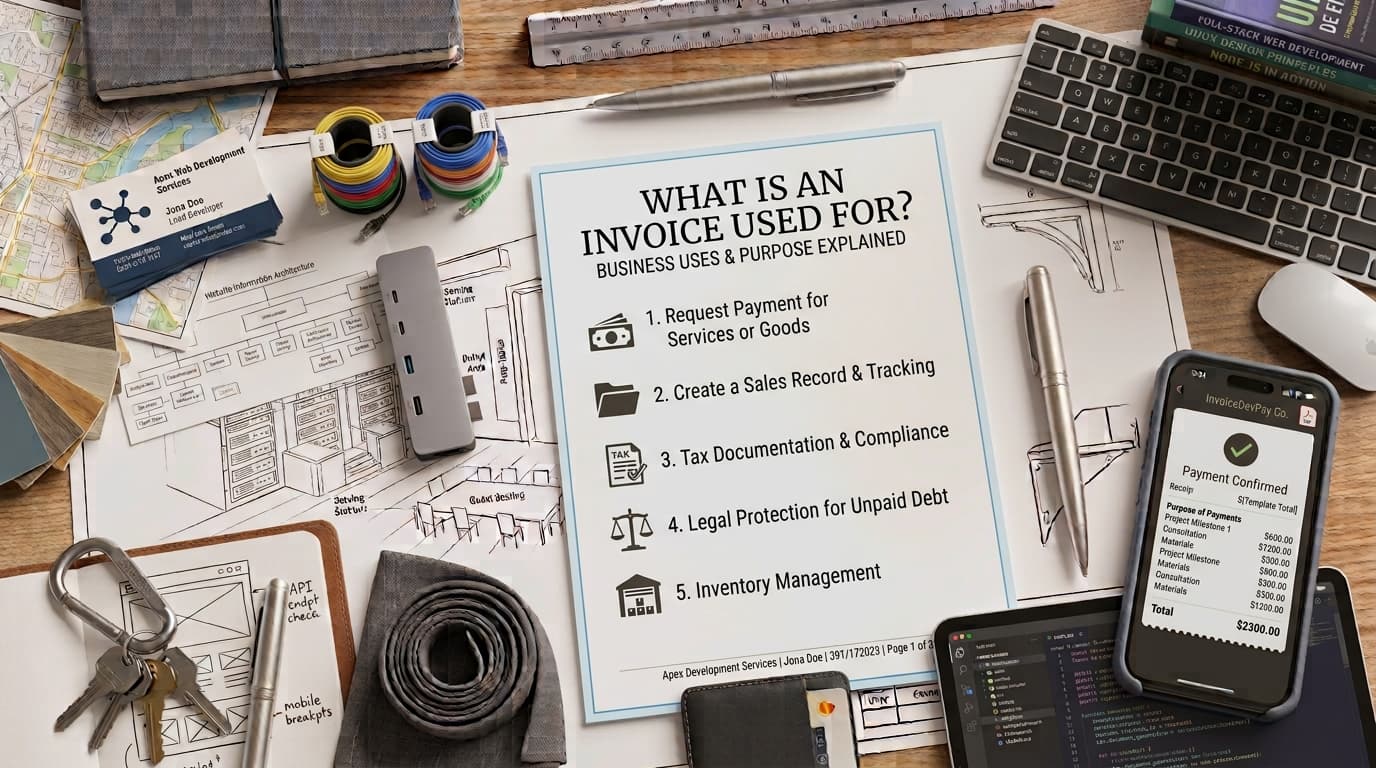
At its core, an invoice is a commercial document issued by a seller to a buyer that acts as a request for payment. While it is easy to view an invoice simply as a bill, its function in a modern business environment is comprehensive. It serves as a bridge between a completed transaction and the financial records that keep a company operating.
Understanding what an invoice is used for is helpful for any business owner. Beyond the immediate goal of requesting payment, an invoice creates a record of the transaction. It documents the goods or services provided, the agreed-upon price, and the timeline for payment. By establishing these details in writing, a business provides clarity to the client regarding the terms of the transaction.
The Role of Invoices in Financial Recordkeeping
In the context of business operations, invoices are foundational. They serve as primary source documents that provide evidence of a business transaction. For a business to maintain a clear picture of its financial health, it must track both incoming revenue and outgoing expenses.
The Internal Revenue Service (IRS) lists invoices among the supporting documents that can contain information used in business books and tax records. The IRS notes that businesses may choose a recordkeeping system suited to their specific needs, provided the system clearly shows income and expenses. Invoices function as these essential records, providing the data needed to substantiate business activities during financial reviews or tax preparation.
When you look at an invoice from a recordkeeping perspective, you are looking at a mechanism for tracking accounts. An invoice allows a business to match its bank deposits against expected payments. By keeping a systematic record of issued invoices, a business can identify which payments are outstanding and which have been collected. This level of organization is helpful for financial transparency and for generating reports that reflect the performance of the business.
Operational Benefits: Beyond the Payment Request
While the primary purpose is billing, the operational value of an invoice extends into daily business management. An invoice provides a structured way to define terms of service, including payment deadlines and specific product or service descriptions. This clarity helps prevent misunderstandings and ensures that the client knows exactly what they are being billed for.
Invoices also serve as a communication tool. By listing line items, discounts, and fees, a business provides the client with a detailed breakdown of the transaction. This transparency supports professional communication. When you are ready to organize your own billing, you can create your first invoice to format, preview, print, or download an invoice as a PDF. The tool supports business and client details, an invoice number, issue and due dates, currency, line items, payment instructions, terms, notes, discounts, one document-level tax, shipping or fees, paid amount, and balance due. It calculates line totals, subtotal, discounts, tax, fees, total, paid amount, and balance due using exact decimal arithmetic.
Beyond the transaction itself, invoices help in managing cash flow. By maintaining a consistent schedule of invoicing, a business can track its liquidity more accurately. It allows owners to see at a glance which clients have settled their balances and which might need a follow-up. This proactive approach to billing is a hallmark of a well-run operation.
Best Practices for Maintaining Invoice Records
Effective recordkeeping is about efficiency and clarity. The IRS notes that businesses may choose a recordkeeping system suited to their specific needs, provided the system clearly shows income and expenses. Whether you prefer digital storage or physical files, the goal is to create a system that allows you to retrieve information when needed.
Consistency is helpful. Using a standard layout for your invoices ensures that you provide the same level of detail for every client. This includes clear numbering, accurate dates, and professional formatting. Digital storage is often a practical choice for modern businesses, as it allows for easy searching, sorting, and backup.
When maintaining your business records, consider these practices:
Standardize your layout: Use a consistent template so that clients and your own team know exactly where to find key information like the invoice number, total, and payment due date.
Keep digital backups: Storing invoices as PDFs ensures they remain readable and accessible over time.
Organize by date or client: Choose a filing structure that makes sense for your business workflow, whether that is chronological or categorized by customer.
Review periodically: Regularly reconcile your issued invoices against your bank statements to ensure that your records accurately reflect your actual cash position.
Remember that requirements for recordkeeping can vary significantly depending on your jurisdiction, industry, and specific tax status. Because every business is unique, your system should be tailored to the complexity of your operations. If you have questions regarding specific tax or regulatory requirements, consult with a qualified professional.
Practical Workflow for Invoice Creation
Creating an invoice is a process that requires attention to detail. To ensure your invoices are clear and professional, follow a consistent workflow.
1. Define the Scope and Terms
Before sending an invoice, ensure that the scope of work or the goods provided are clearly defined. This prevents confusion later. Include payment terms, such as when the payment is due, to set clear expectations with your client.
2. Use a Professional Template
A professional template ensures that all necessary information is presented clearly. Your invoice might include:
Your business contact information.
The client’s contact information.
A unique invoice number for tracking purposes.
The date of issue and the payment due date.
A detailed list of goods or services provided.
The total amount due, including any applicable taxes or fees.
3. Review for Accuracy
Before finalizing the document, double-check all calculations. Ensure that the line items, subtotals, and the final total are correct. Using tools that utilize exact decimal arithmetic helps prevent rounding errors that could lead to discrepancies in your financial records.
4. Delivery and Storage
Once the invoice is ready, provide it to the client in a format that is easy for them to read and store, such as a PDF. Simultaneously, save a copy for your own records. Maintaining a consistent filing system, whether digital or physical, will make it easier to manage your accounts receivable and prepare for tax season.
Frequently Asked Questions
Is an invoice the same as a receipt?
No. An invoice is a request for payment sent before the transaction is finalized. It outlines what is owed. A receipt, by contrast, is provided after payment has been received and serves as confirmation that the transaction is complete.
Do all businesses need to use invoices?
While not every transaction requires a formal invoice, such as retail purchases where payment is immediate, invoices are common for business-to-business transactions, professional services, and any situation where payment is made on credit or after the delivery of goods. They are helpful for any business that needs to track accounts receivable or maintain detailed financial records.
What is an invoice in business?
In a business context, an invoice is a document that formalizes the sale of goods or services. It serves as a request for payment, a record of the transaction for both the buyer and the seller, and a tool for tracking accounts receivable. It defines the scope of the work, the cost, and the payment terms, ensuring that both parties are in agreement regarding the transaction.
How should I store my invoices?
The IRS notes that businesses may choose a recordkeeping system suited to their specific needs. Digital storage is a common method because it allows for easy searching and backup. Regardless of the method, the system should clearly show income and expenses. Ensure that your storage method is consistent and allows you to retrieve documents when necessary for financial reviews or tax preparation.
Can I include payment instructions on an invoice?
Yes, including clear payment instructions is a common practice. This might include information on how to send payment, such as bank transfer details or other accepted payment methods. Ensure that the information provided is accurate and clear to avoid delays in receiving payment. Avoid including sensitive personal identifiers or full credentials that could pose a security risk.
What if I make a mistake on an invoice?
If you discover an error on an invoice that has already been sent, it is best to address it promptly. You may need to issue a corrected invoice or a credit memo to adjust the balance. Maintaining clear communication with your client is essential in these situations to ensure that both parties remain aligned on the correct amount due.
How do I handle taxes on an invoice?
Tax requirements vary by jurisdiction, industry, and tax status. If you are required to collect tax, ensure that the tax amount is clearly stated on the invoice. Because tax laws are complex and subject to change, it is advisable to consult with a tax professional to ensure that your invoicing practices align with the requirements applicable to your specific business.
Are there specific requirements for invoice numbering?
While there is no universal law mandating a specific numbering format, using a unique, sequential, or organized numbering system is a best practice. It helps you track your invoices, identify which have been paid, and manage your financial records more effectively. Choose a system that is easy for you to maintain and understand.
How long should I keep my invoices?
Requirements for record retention vary significantly depending on your jurisdiction, industry, and tax status. Because these requirements can change, it is best to consult with a professional or refer to official guidance from your local tax authority regarding the length of time you should retain business records.
Can I add my logo to an invoice?
Yes, adding a logo can help reinforce your brand identity and make your invoices look more professional. When using tools to generate invoices, ensure that your logo is processed securely. For example, the ToolNimbly invoice generator processes logos locally, meaning they are not uploaded to a server, which helps maintain your data privacy.
Put this into practice
Use the Invoice tool for the calculation, then read What a payment receipt should include for the supporting explanation.